
Showing posts with label programming. Show all posts
Showing posts with label programming. Show all posts
Thursday, April 21, 2016
Processing
Arutro told me about a really interesting program that is worth exploring, especially if you have any interest or background in programming and computer science. The site describes the program as: "Processing is a flexible software sketchbook and a language for learning how to code within the context of the visual arts. Since 2001, Processing has promoted software literacy within the visual arts and visual literacy within technology." Basically it is a program that allows you to create art, motion graphics, among hundreds of other applications. The site contains a variety of examples of some of the basic uses. This is one that changes the hue as you drag your mouse across it. Below, you are given the code that makes it work, and it is often surprising how simple the basic stuff is. The language is based on java so if you are good with that program you should feel right at home. Download the program and try entering and tweaking some of the sample code if you are interested. It is a really cool concept and the possibilities are endless. Here are some exhibition examples of work people have done.


Monday, November 16, 2015
Multimedia Programming
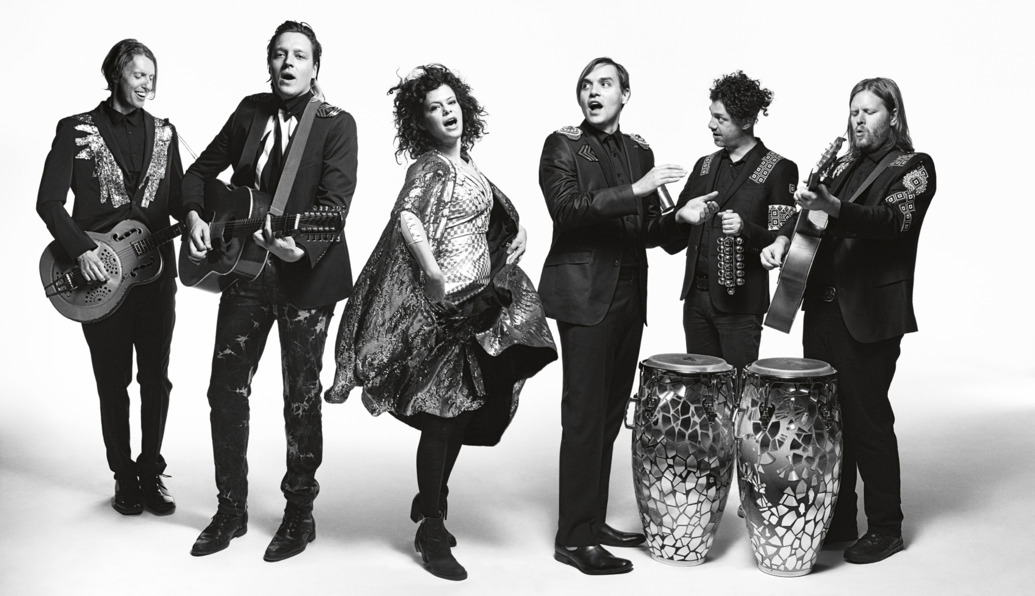
I have been pretty interested in multimedia programming for a while now and I really like the idea of interactive animation. One of the most creative and innovative music videos I have ever seen is the Arcade Fire music video for The Wilderness Down.
It uses a lot of really interesting techniques. The personalization of providing an address is really creative and makes the experience feel like it is meant for you. I am distracted by the multiple pop-ups but I still think that it is really creative. It is also unfortunate that there are a lot of technical restrictions on what will work with this website because there are only certain attributes that HTML5 supports.
I think a lot of the Multimedia Programming course in the CS Department is a good segway between producing animations and coding them. I think that the potential interactivity of animation is the future of media!
Thursday, October 29, 2015
Digital Product Placement
In recent years, it has become increasingly popular for studio distributors to sell promotional spots in their syndicated programing, squeezing even more money out of their rich syndication deals. This comes in the form of product placement. However, it's more high-tech than placing a cereal box in the background of a scene--this is done digitally. If you watch closely, advertisements in some of your favorite reruns may suddenly appear or change from the what was shown in the original episode.
Take this How I Met Your Mother reference for example.

The first picture is what originally aired when the episode premiered. The ladder features a Gatorade advertisement that was added years later.
In 2011, another syndicated episode of HIMYM (2006 original air) contained this advertisement for the movie Bad Teacher which was released in theaters around that same time.

This was done by SeamBI; a company that is changing the game. They've made it so that brands can purchase product placement within a syndicated show in the same manner that they'd buy regular advertisements. SeamBI is responsible for digitally inserting new ads into old programs. The break down their process into three steps:
1. Identifying product placement opportunity with content
2. Integrating the advertisements once sold.
3. Delivering the ad-enhanced content to the designated broadcasters.
Most recently, Mirriad has also become a popular digital ad firm.
The major value in this technology is the ability to customize and integrate content quickly. It works to help target very specific geographic areas and markets. That is something that every advertiser wants.
Tuesday, September 29, 2015
Animation and Light
I have become interested in programming live interactive experiences. I think that the manipulation of light in an artistic way is a really creative way to incite emotion in an audience. A lot of these light artists are using innovative ways to animate. The most interesting I found was light painting. For this technique they have a camera capturing a screen that is on a track that moves back and forth in the z-direction. The screen projects a different frame of a video and it creates the effects of outlining an 3-D image. Another interesting use of light to animate is the artist who uses drones programmed to move mirrors that reflect projected light to create shapes and images. One artist also featured a large sphere covered in RGB LED lights acting as pixels. This sphere could be programmed to be animated images. These videos from The Creators Project showed multiple ways to incorporate new technology, sensors, camera, programming, and lights to animate.
I foresee this technology being utilized by performers in concert, art exhibits, and theatrical engagements.
Thursday, September 11, 2014
ASCII Art - A Quick How-to and Know-how
For those wondering, what ASCII art is, let me show you.
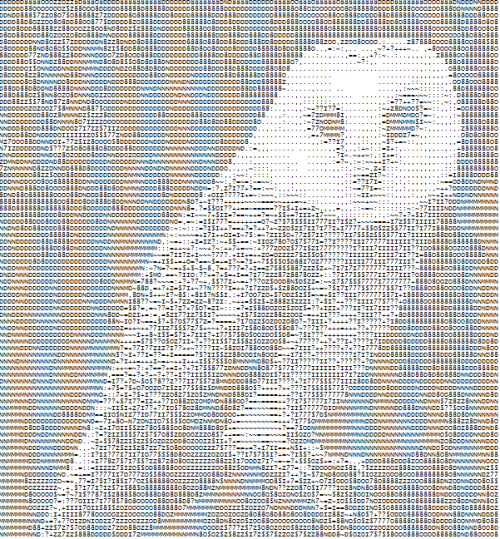
See how it's made up of numbers and letters and such? Those are ASCII characters. With ASCII art, a general rule of thumb is that if you want to see the picture better, get further away from it. More complex pictures will be bigger, using more characters.
There are different ways to go about creating said art. You can sit for many hours and type out a masterpiece, or you can be lazy and make a program that does it for you!


So we have our short clip picked out. Next, we need to turn that clip into a series of stills to turn into ASCII masterpieces. Each one is going to be a frame of our finished product. I ended up breaking this clip into 18 frames. I then took each of the new ASCII pictures and compiled them into a gif.

The timing needs a little work, but there we have it! Animated ASCII! I would love to make some kind of plugin that converts frames to ASCII to be able to do this in an even lazier fashion, but that's a dream for the future.
A lovely Barn Owl by me
See how it's made up of numbers and letters and such? Those are ASCII characters. With ASCII art, a general rule of thumb is that if you want to see the picture better, get further away from it. More complex pictures will be bigger, using more characters.
There are different ways to go about creating said art. You can sit for many hours and type out a masterpiece, or you can be lazy and make a program that does it for you!

Being a huge nerd can take you from this
To this!
So making the pictures is one thing, but what if we wanted to do more with them? What if we wanted them to move? Well, we can do that! It's just going to require some work.
First, we need to know what we want to animate. For this, I'm going to use another thing from Steven Universe
Friday, October 7, 2011
Beyond motion graphics, or is it?
To give you an idea as to the power of some of the tools available to us, coming from the OS (Open Source) community I would like to share two very different videos. They are simply some of the thousands of projects created with PD (PureData) a free open source program mentioned in my comment to Jenna's post below.
Although originally a program designed to control and manipulate music, it has evolved, thanks to the OS community into one of the most used real-time graphical/auditory, performance programs in the world. The program however is capable of controlling absolutely anything you can somehow connect to a computer (including wireless of course), including robots, projectors, cameras, phones etc. etc. No limit but your imagination.
In this video that was shown at TED's "Full Spectrum" auditions, Onyx Ashanti demonstrates "beatjazz", music created with two handheld controllers, an iPhone and a mouthpiece, and played with the entire body. The software is Pd controlling three Arduinos which are open source hardware controllers.
Although originally a program designed to control and manipulate music, it has evolved, thanks to the OS community into one of the most used real-time graphical/auditory, performance programs in the world. The program however is capable of controlling absolutely anything you can somehow connect to a computer (including wireless of course), including robots, projectors, cameras, phones etc. etc. No limit but your imagination.
In this video that was shown at TED's "Full Spectrum" auditions, Onyx Ashanti demonstrates "beatjazz", music created with two handheld controllers, an iPhone and a mouthpiece, and played with the entire body. The software is Pd controlling three Arduinos which are open source hardware controllers.
Subscribe to:
Posts
(
Atom
)