Showing posts with label Interstellar. Show all posts

Sunday, November 8, 2015

Interstellar black hole

Working together with a prominent astrophysicist (Kip Thorne), the film's visual effects team created what may be the first scientifically accurate display of a black hole on the big screen. To fully realize director Christopher Nolan's vision for "Interstellar," visual effects studio Double Negative was tasked to "produce images of things that aren’t even in our dimension, and furthermore have them accurate to not only quantum physics and relativistic laws, but also our best understanding (guess) of quantum gravity.”
Thorne shared his knowledge of black holes, and how he envisioned they would appear. Instead of the typical movie version of a black hole, which is depicted as a breach within space, Thorne’s research indicated black holes might be more like three-dimensional spheres. The physical appearance of Thorne's black holes is colorfully described in an interview with Paul Franklin in the Warner Brothers behind-the-scenes video "Interstellar: Building A Black Hole" (below):


Wednesday, May 27, 2015

Interstellar: The Making of Tesseract

Today I came across another post about the CGI used in the film Interstellar, however, this time it was showing how surprisingly little CGI was used.

Warning: Spoilers Ahead. 

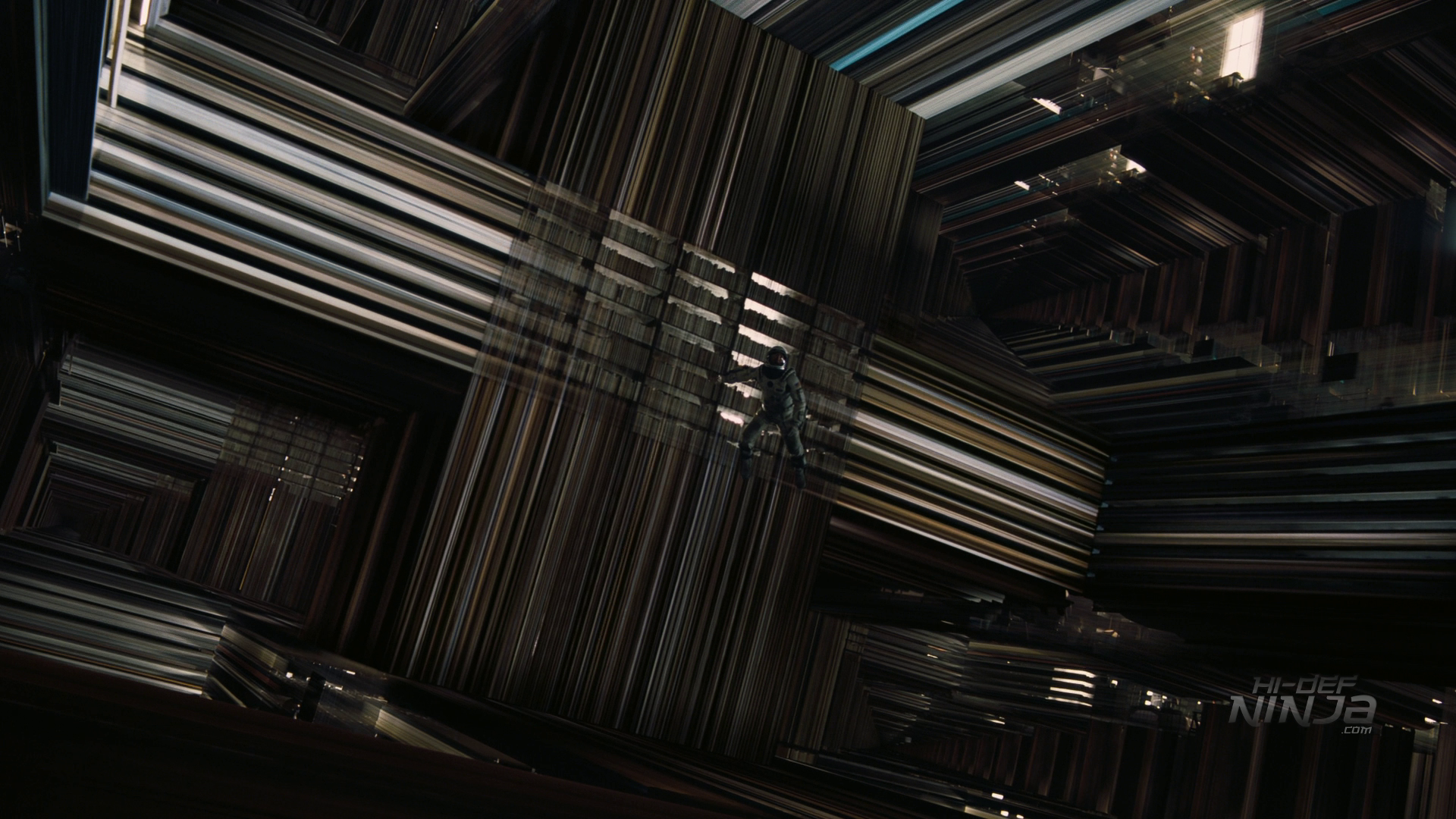
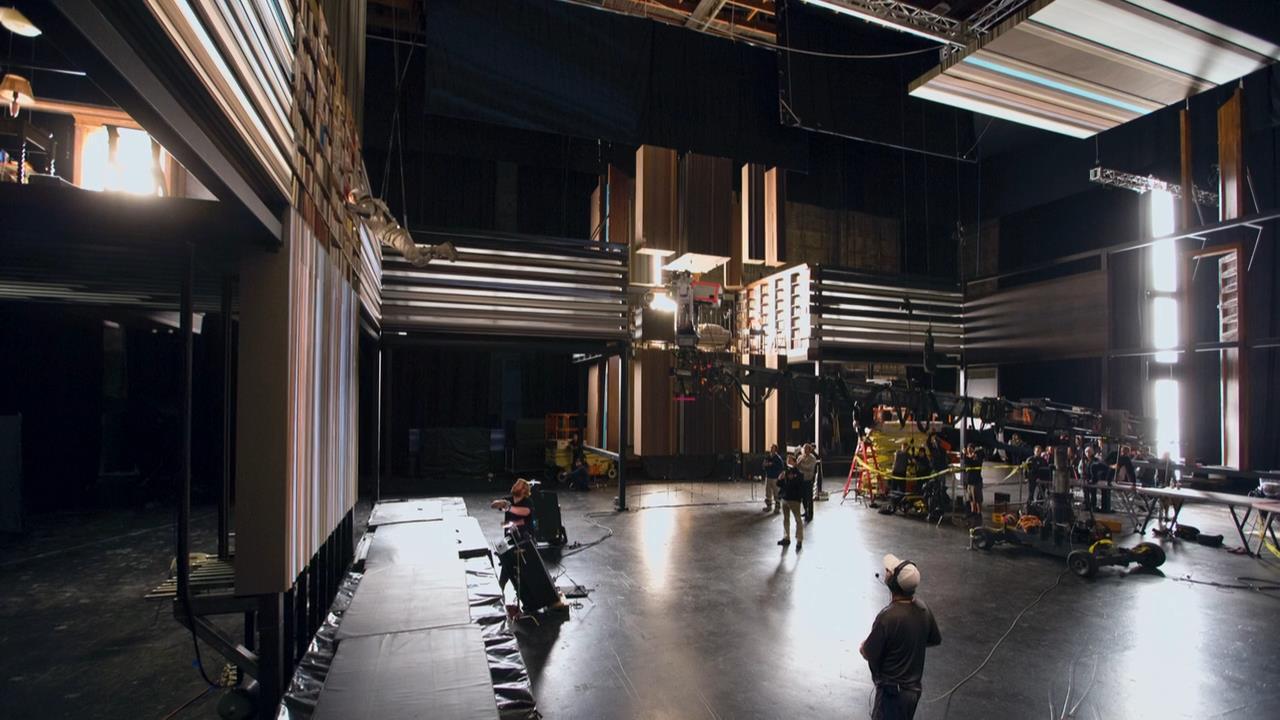
In the movie when the main character reaches the center of a black hole he finds himself suspended in time, trapped behind a window, gazing into the past. In this scene he is floating with bookcases surrounding him in a infinite-like pattern.


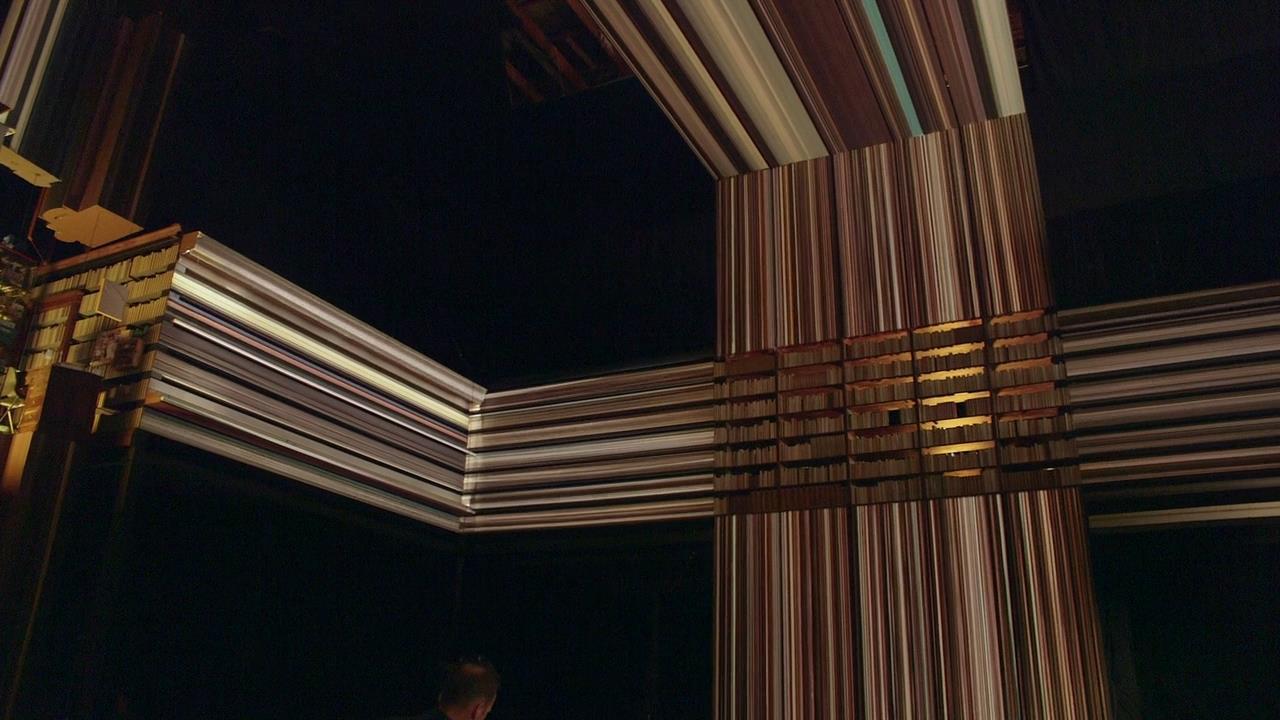
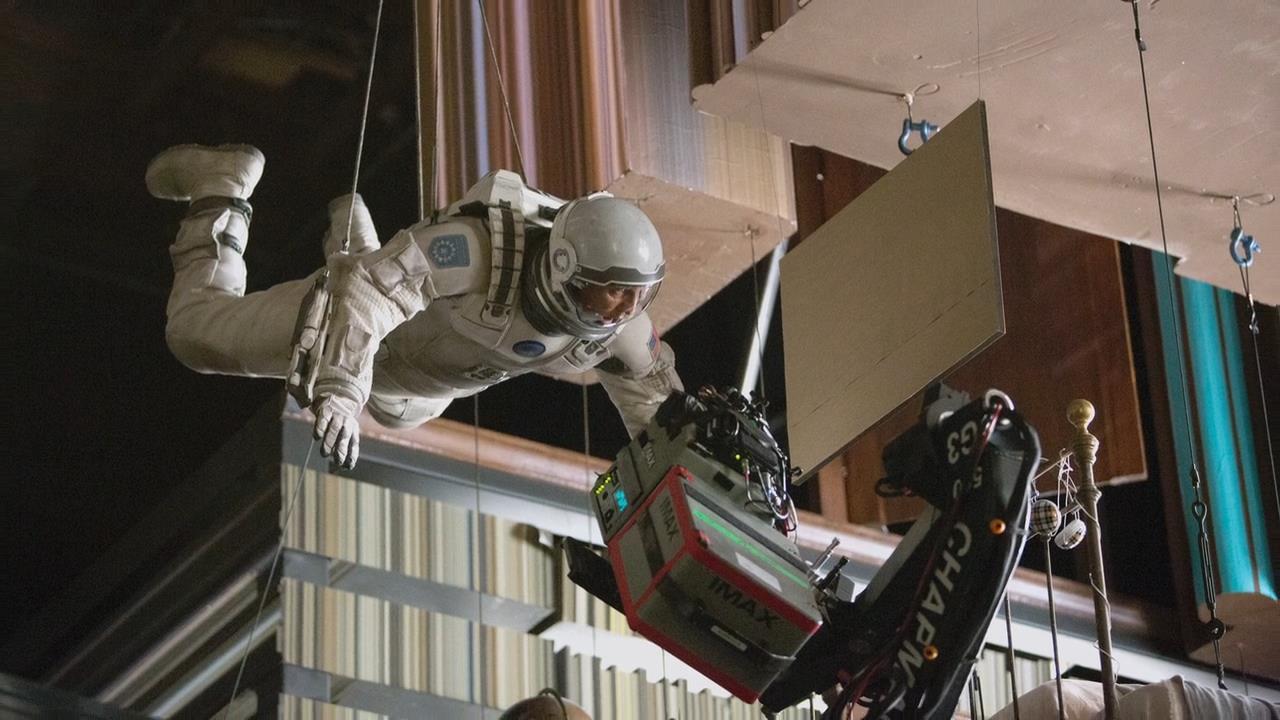
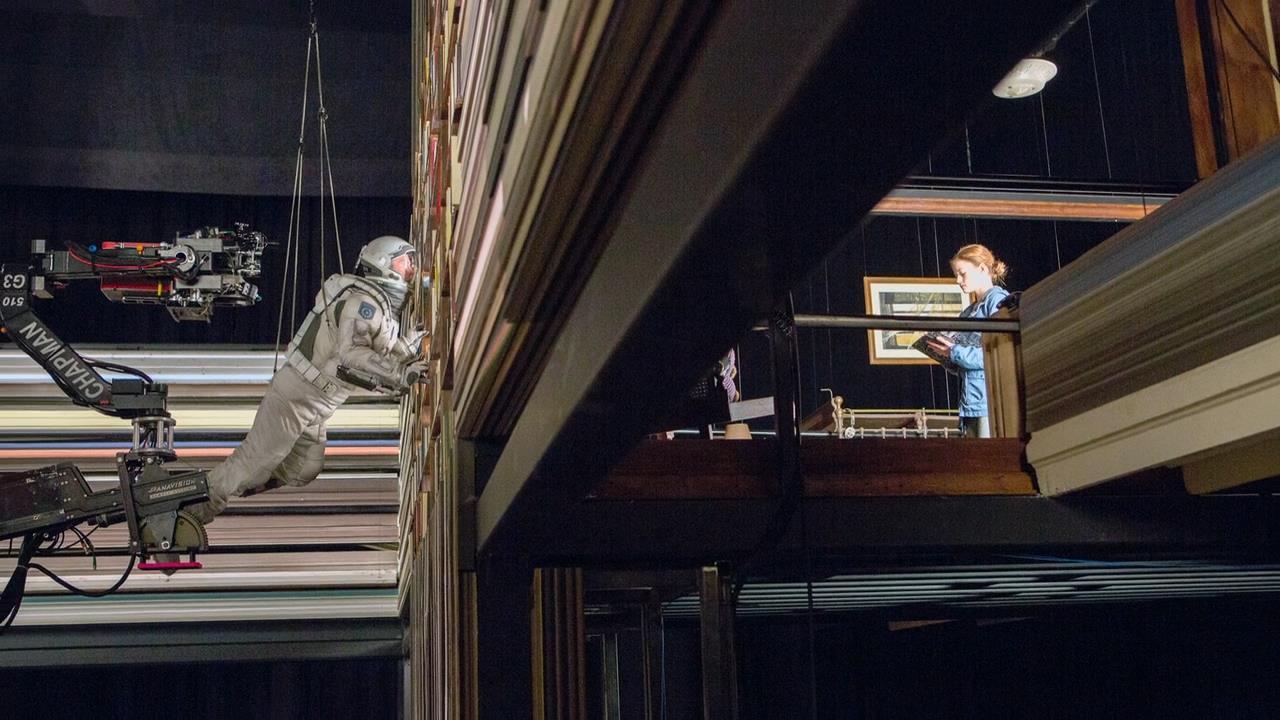
Anyone would be justified to assume the majority of the set was computer generated; it was. But surprisingly, a good amount of it was actually physical. Below are behind-the-scene shots of the actual set. Thanks to TheFilmStage.com 


I love being able to see the behind the scenes shots of sets and thought these were worth sharing. 

Friday, March 27, 2015

Interstellar VFX Part 2 - TARS and CASE Robots

Thursday I posted about the stunning VFX work in Interstellar. Today I came across a behind the scenes video of how they created the robots in the film, TARS and CASE. They play a major role in the film and they were created with a combination of motion graphics and puppeteering.


The basic frames of the robots were created with metal and puppeteered on set using various methods. In some scenes where the robots needed to move quickly through water, they used a modified ATV rig to propel the robot puppet through the water. Then, using CGI, the more detailed aspects of the robots were generated and the rigs used were keyed out of the shots.


This video below shows you exactly how they did it and it's amazing to see how it was actually done.
EDIT: The video was removed after I posted this. Here is the mirror link.

Thursday, March 26, 2015

Interstellar's Black Hole

Last night I watched Interstellar for the first time. I was blown away by the amazing depiction of space, the black hole, and the worm hole in the film. It's no surprise that the film was the winner of the 2015 Oscar for Visual Effects.


It took the VFX team hundreds of hours of tedious work to produce such a stunning product. Black holes have such a strong gravity field that light literally cannot escape them, and light that is surrounding black holes is bent and distorted. Filmmakers often use a technique called ray tracing to render light and reflections in images. "Ray-tracing software makes the generally reasonable assumption that light is traveling along straight paths." Generating the proper light effect as VFX was a difficult task for the team. Eugenie von Tunzelmann, a CG supervisor at Double Negative said this about their work, "We had to write a completely new renderer." Some frames took over 100 hours to render with such complex light systems in place. However, it was all worth it in the end. The visual effects alone are worth the money to see this movie. See the full article by Adam Rogers, from Wired, here.