Showing posts with label behind the scenes. Show all posts
Showing posts with label behind the scenes. Show all posts
Thursday, April 28, 2016
Change in Animation & Alice in Wonderland Behind The Scenes

Thursday, March 31, 2016
Always Working
I’ve taken a growing interest lately in “behind the scenes” videos for large budget productions. One animated video that I recently saw was a short promo for McDonalds called Always Working. It was a one minute piece made with 3D printed figures and a background full of miniature plastic trees and hills. The reddit user who posted it also included a “making of” video that I found to be very interesting. It shows all aspects of the production process, including some of the character modeling in Maya and compositing in After Effects. The reddit user was an animator on the project and also held a mini AMA (Ask Me Anything) session in the comments of the post. I think that videos like this one give an interesting glimpse of what it may be like to work as a professional animator.
Thursday, November 12, 2015
Gravity BTS
Gravity is definitely one of the most Visually stunning films ever made. It's one of those movies where you feel like you are actually there in the moment and it just seems so real.
And yet 95% of the movie was CG. Almost everything you see was generated in post production using advance 3D software. The only things that were practically shot in production were the actors. But everything else from Space suits to ships to satellites and more were CG elements.
This behind the scenes look at Gravity explains the process of what it was like to make this movie, knowing that majority of it was going to be CG.
And yet 95% of the movie was CG. Almost everything you see was generated in post production using advance 3D software. The only things that were practically shot in production were the actors. But everything else from Space suits to ships to satellites and more were CG elements.
This behind the scenes look at Gravity explains the process of what it was like to make this movie, knowing that majority of it was going to be CG.
Friday, October 9, 2015
Behind the Looks: Marvel.
Have you ever wondered how special effects are done for Marvel? Well now they have a site which will soon showcase behind the scenes of the Avengers, as well as how special effects are used and shot. Isn't that incredible?
Go Behind the Special Effects of Marvel’s The Avengers

Go Behind the Special Effects of Marvel’s The Avengers

I think this is a great idea, and an interesting way to be able to see exactly how much green screens, and what the sets actually look like before Marvel creates this other world that is entirely different.
Thursday, September 10, 2015
Lion King: Different Methods for different animators
The Lion King is probably my favorite Disney animated movie that isn't a Pixar movie. This is a movie that I grew up with (I was born in 1994, aka the year it was released, so I am as old as this movie (WOW)) and it is a beautiful story and fantastic animation! They really did a fantastic job of making each character, each animal, come to life!
I was searching online for some BTS of some animated movies, and I came across this one for the Lion King and their creative processes. I thought this was really cool to see the different methods that they used, from study real animals in the studio to study the voice actors movements and facial expressions to add emotion to the characters, or even just simply walking around impersonating how the animator thinks that particular character they are drawing would move and behave. It was also interesting how each character was designated to a single animator (or some times a pair). But come together in the end to make a masterpiece!
Definitely check out the Lion King BTS video here:
I was searching online for some BTS of some animated movies, and I came across this one for the Lion King and their creative processes. I thought this was really cool to see the different methods that they used, from study real animals in the studio to study the voice actors movements and facial expressions to add emotion to the characters, or even just simply walking around impersonating how the animator thinks that particular character they are drawing would move and behave. It was also interesting how each character was designated to a single animator (or some times a pair). But come together in the end to make a masterpiece!
Definitely check out the Lion King BTS video here:
Wednesday, May 27, 2015
Interstellar: The Making of Tesseract
Today I came across another post about the CGI used in the film Interstellar, however, this time it was showing how surprisingly little CGI was used.


Warning: Spoilers Ahead.
In the movie when the main character reaches the center of a black hole he finds himself suspended in time, trapped behind a window, gazing into the past. In this scene he is floating with bookcases surrounding him in a infinite-like pattern.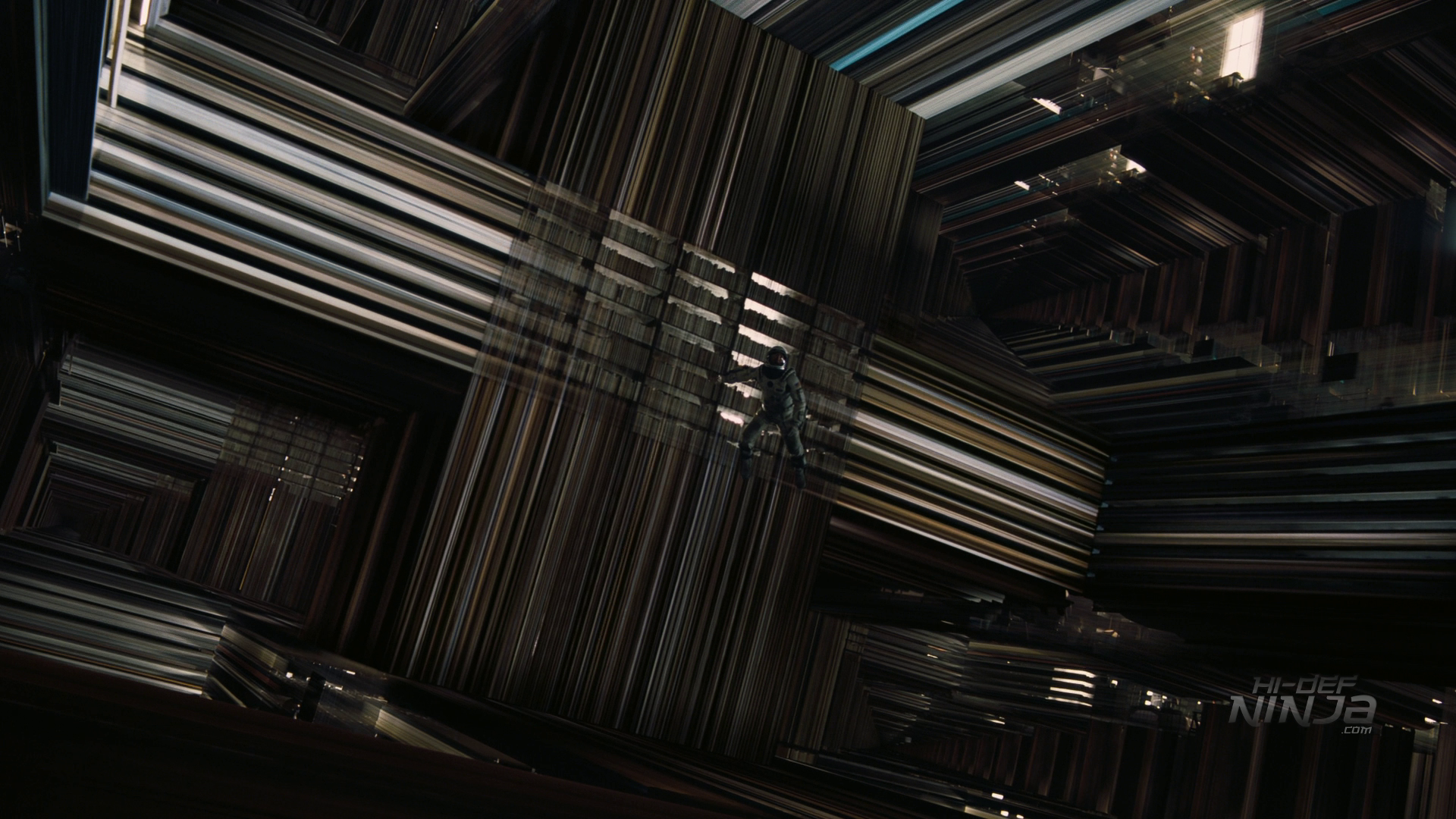
Anyone would be justified to assume the majority of the set was computer generated; it was. But surprisingly, a good amount of it was actually physical. Below are behind-the-scene shots of the actual set. Thanks to TheFilmStage.com
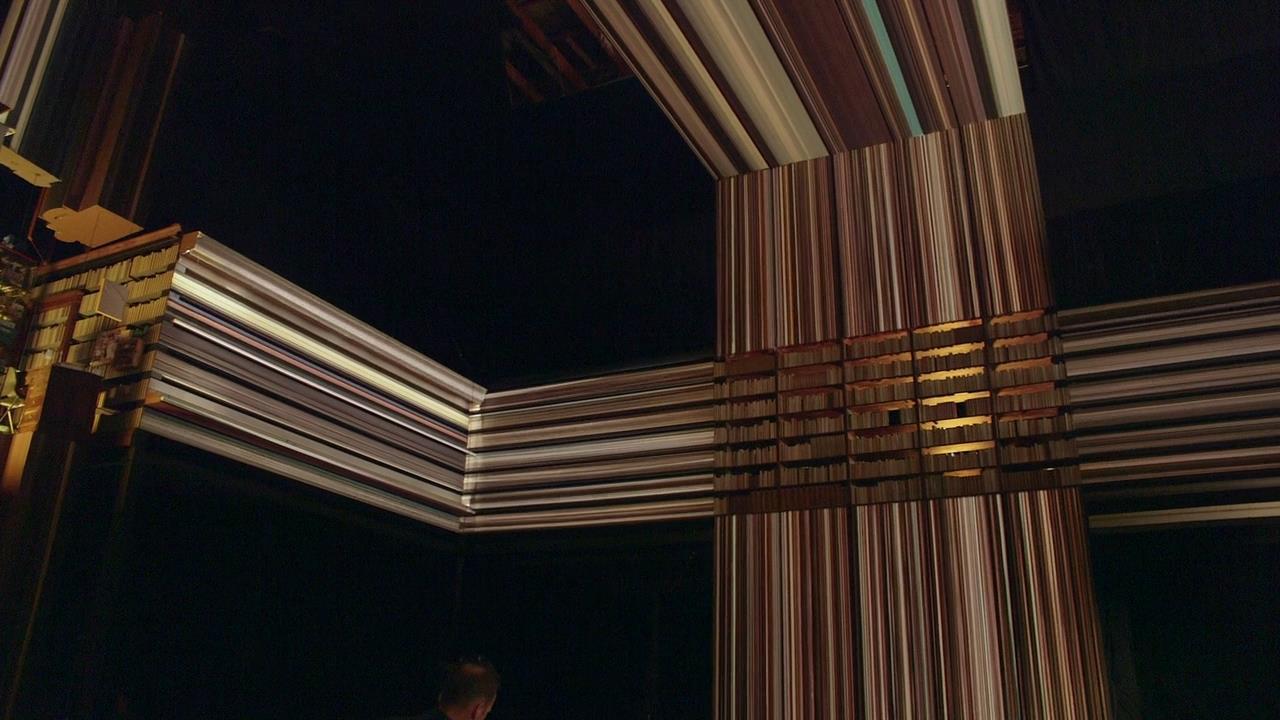

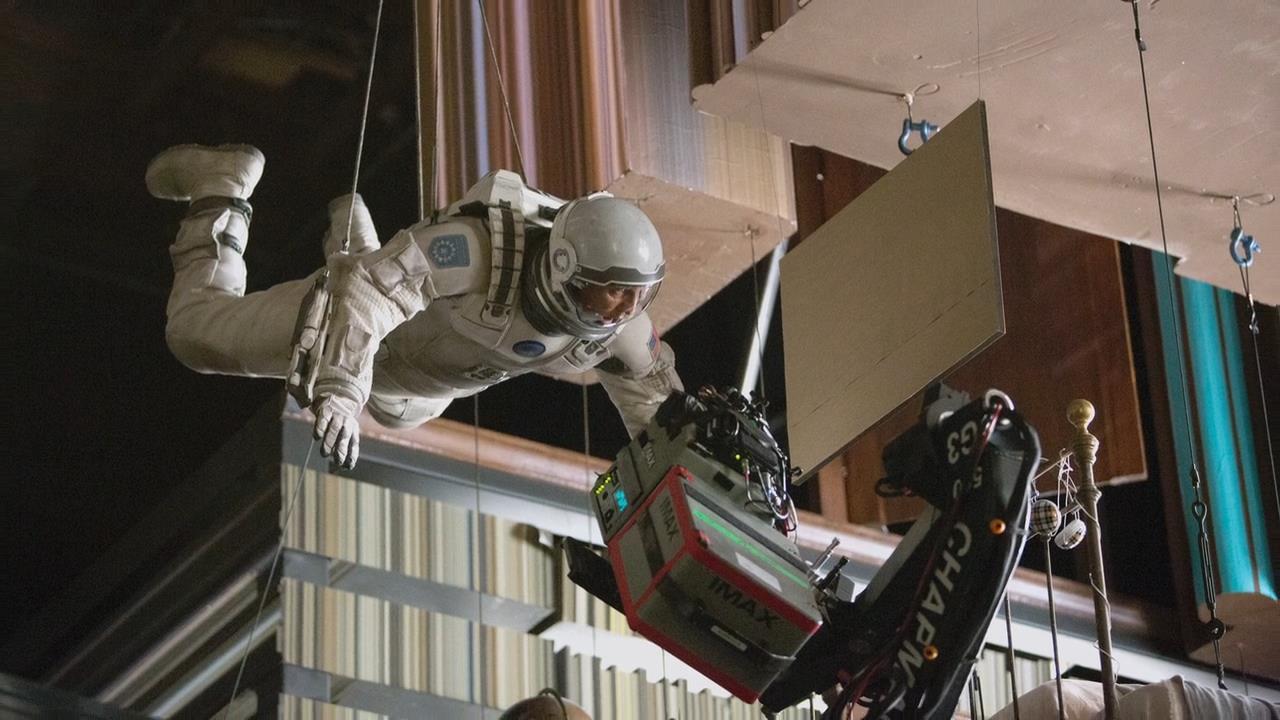
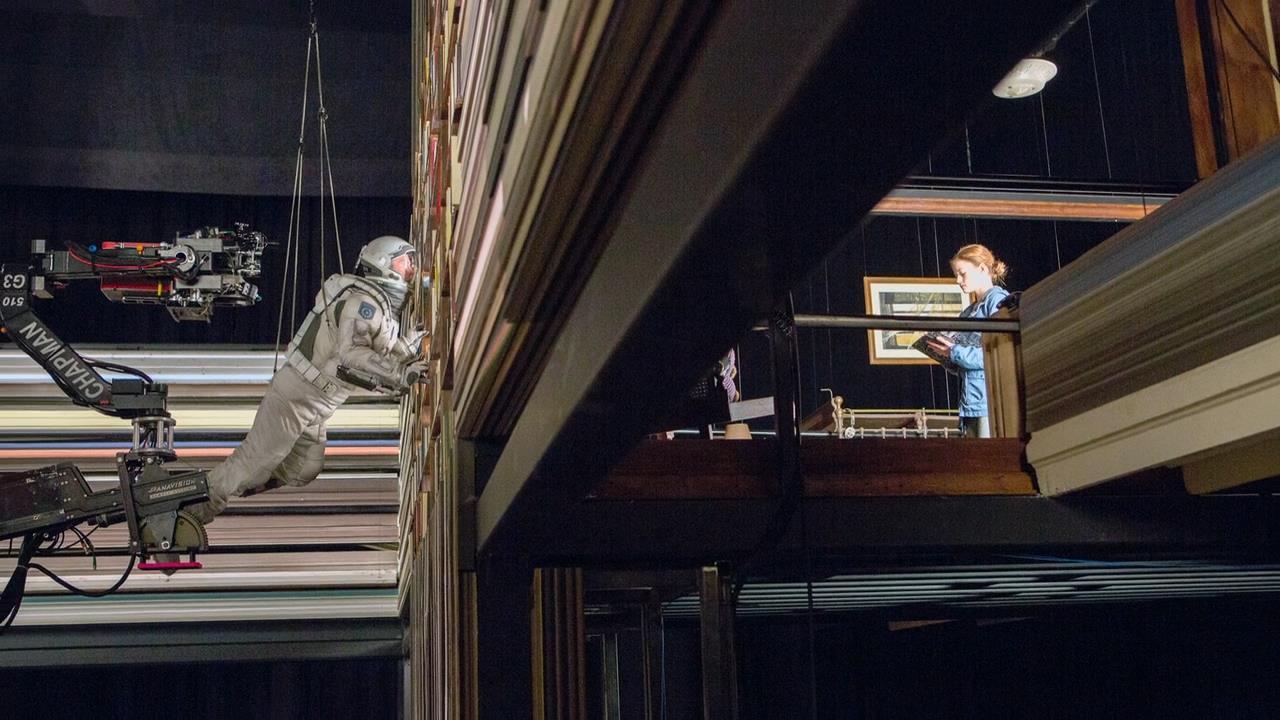
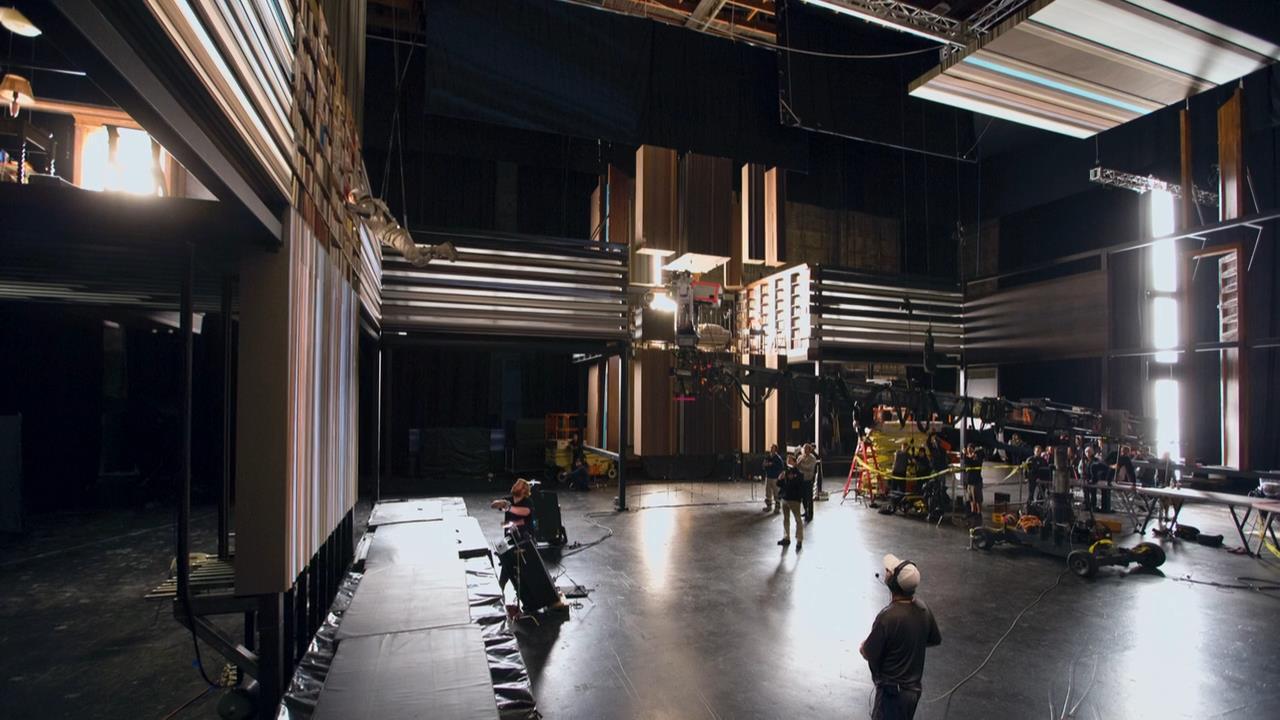
I love being able to see the behind the scenes shots of sets and thought these were worth sharing.
Wednesday, April 8, 2015
The Avengers Behind The Scenes
Since we are all shooting are green screen final projects this week I thought it would be interesting to share this video. It takes a behind the scenes look on The Avengers movie and some of the green screen techniques they used. Obviously none of us will be doing something as technical as this but it's still cool to take a look at. Cheers!
Friday, March 27, 2015
Interstellar VFX Part 2 - TARS and CASE Robots
Thursday I posted about the stunning VFX work in Interstellar. Today I came across a behind the scenes video of how they created the robots in the film, TARS and CASE. They play a major role in the film and they were created with a combination of motion graphics and puppeteering.

The basic frames of the robots were created with metal and puppeteered on set using various methods. In some scenes where the robots needed to move quickly through water, they used a modified ATV rig to propel the robot puppet through the water. Then, using CGI, the more detailed aspects of the robots were generated and the rigs used were keyed out of the shots.


The basic frames of the robots were created with metal and puppeteered on set using various methods. In some scenes where the robots needed to move quickly through water, they used a modified ATV rig to propel the robot puppet through the water. Then, using CGI, the more detailed aspects of the robots were generated and the rigs used were keyed out of the shots.

This video below shows you exactly how they did it and it's amazing to see how it was actually done.
EDIT: The video was removed after I posted this. Here is the mirror link.
EDIT: The video was removed after I posted this. Here is the mirror link.
Friday, December 5, 2014
Airbnb in One Shot
Behind the scenes videos are always really interesting to
watch when you see something as cool as this Airbnb commercial. The whole
commercial is done in one shot, which is pretty amazing considering how intricate
and precise the movements are. The behind the scenes video shows the process of
creating these models that move and change smoothly and seamlessly. The models
are highly detailed and coordinated. A rough digital version of the animation
was created to get the movements right and then the physical models were
created and aligned to perfectly match it. It’s also cool to see people
physically rotating and moving set pieces. The model itself is a miniaturized
world that is very pleasing to travel through.
Friday, September 26, 2014
Gritty Reboots: The Process
Gritty Reboots is a youtube channel dedicated to remaking nostalgic television shows/video games/comics into something more well, gritty. And while these videos may or may not be your cup of tea, it’s interesting to see the kind of effects they have to do to accomplish what they want. They divide their work into three parts: the final product video, the back-to-back comparison video, and the how it was done video. They’re definitely a channel I’d recommend checking out if you’d like to see the process of video production and after effects with a small-scale company.
Looking through their work, Gritty Reboots definitely had built a signature look: dark and edgy. They're lighting is more often than not borderline cold, catering to the dynamics of light and dark in a picture. It only makes sense given that they're final products are marketed as being more serious than their whimsical origins.
The before and after is a good look at what their original shots looked like without all the color-grading and special effects. It's really interesting to see what a change in lighting here or a single mask there, makes in a film.
Similar to other small-scale video production companies on the internet (such as the Hillywood show), Gritty Reboots has a small team that knows how to get the shot. Their behind-the-scenes are as interesting (if not more) than the final product. To me at least, it shows just how able you are to accomplish something if you're willing to put in the work. Like other BTSs of theirs, they also offer a glimpse in to the entire production process as a whole. Yes, these aren't meant to be tutorials but they can do just fine as inspiration.
Gritty Reboots is certainly a company that's worth looking at, even if it's just to see their feats they've managed to accomplish.
Monday, April 7, 2014
Are heroes born or created?
After seeing Captain America: The Winter Soldier this past weekend, I remembered a question that I had about the first Capt. America movie that I never got answered. If you've seen the film, you've seen the amazing transformation Chris Evans' character, Steve Rogers, goes through in order to become the patriotic hero we all know and love.
 It's pretty absurd to even think about, let alone to try to figure out how they did it. They must have used two different actors. That's what I originally thought, at least. I figured there weren't any visual effects at all. It made perfect sense to me for them to use two actors with very different physical builds and similar faces and then to have Chris Evans ADR (automated dialogue replacement) the scenes with his own voice.
Well, it turns out that I was partially correct in the two actors assumption. Partially. There were two main techniques the crew used to shrink Cap. down to his original, scrawny size. The first one of the two (the one I was closest to guessing) indeed required the use of a double. Leander Deeny played Evans' double before Steve Rogers goes through the physical transformation that allows him to become the super soldier that stands for all that is American. What they did to cover for the fact that the two actors clearly don't have identical faces, was to place green dots all over Deeny's face to use as motion trackers. Using these motion trackers, animators were able to take Evans' face and place it on Deeny's body. This was achieved by having Deeny act out each and every shot pretty much exactly the same as Evans. Then came the hard part.
That was the easier of the two techniques. The other one (and certainly the more time consuming one) required an entire physical makeover. Basically, the visual effects specialists would take the shots with Evans and literally reshape the majority of his body, making him smaller and thinner. This includes everything from thinning out his neck to completely reshaping his jaw line. The reason for sometimes using this technique over the other one is...well, I'm not quite sure. Apparently the motion tracking was simply less effective in certain circumstances. I don't know what those circumstances must have been, but I'll leave that up to the professionals. For a more detailed explanation of the entire process, take a look at this behind-the-scenes video:
Glad that another mystery in my life has been solved. Onto the next one!

Well, it turns out that I was partially correct in the two actors assumption. Partially. There were two main techniques the crew used to shrink Cap. down to his original, scrawny size. The first one of the two (the one I was closest to guessing) indeed required the use of a double. Leander Deeny played Evans' double before Steve Rogers goes through the physical transformation that allows him to become the super soldier that stands for all that is American. What they did to cover for the fact that the two actors clearly don't have identical faces, was to place green dots all over Deeny's face to use as motion trackers. Using these motion trackers, animators were able to take Evans' face and place it on Deeny's body. This was achieved by having Deeny act out each and every shot pretty much exactly the same as Evans. Then came the hard part.
That was the easier of the two techniques. The other one (and certainly the more time consuming one) required an entire physical makeover. Basically, the visual effects specialists would take the shots with Evans and literally reshape the majority of his body, making him smaller and thinner. This includes everything from thinning out his neck to completely reshaping his jaw line. The reason for sometimes using this technique over the other one is...well, I'm not quite sure. Apparently the motion tracking was simply less effective in certain circumstances. I don't know what those circumstances must have been, but I'll leave that up to the professionals. For a more detailed explanation of the entire process, take a look at this behind-the-scenes video:
Glad that another mystery in my life has been solved. Onto the next one!
Friday, February 21, 2014
The Making of Ted
One of my all time favorite movies is the movie Ted. It is one of the funniest and most entertaining movies I've ever seen! Not only was the humor great but the CGI used to create the main character Ted was fantastic. Seth MacFarlan and his crew did an amazing job in creating him. So because I was such a fan I had to look up how they did it. They used what is called a Xsens MVN Motion Capture rig, which allowed MacFarlan to act for Ted.
Here is just a little video to show you how the Xsens MVN Motion Capture rig works.
It's pretty amazing how actuate the animation is to his actual movements.
So this Xses MVN Motion Capture rig allows Ted's movements to be as realistic as possible. So with this suit on Seth MacFarlan would act out, in a room near the other actor in the scene, Ted's scene like he was in the scene with the other actor and say Ted's lines. Below is a behind scenes video of the making of Ted. Definitely recommend watching; it is truly amazing what technology can do!
There is a longer behind the scenes of Ted in the link below.
Sunday, December 8, 2013
2D Animation as told by Paperman
With technology growing and improving so rapidly, sometimes we forget about the beauty of a simple product. There is always something so natural and easy about taking old techniques to create a modern piece or media. In this case, I am talking about taking a few steps backwards from the new and accepted forms of animation and motion graphics that are done on computers. When animation first became known, it was created through hand drawings. You had to pick up a pencil and draw your animation line by line.

I came across this video on YouTube about the creation and production of Paperman. If you have not seen Paperman, I definitely recommend you check it out. It's a simple love story about two busy city-goers who experience that magical "love-at-first-sight" feeling, with a piece of paper being used to connect them.
What I found interesting is how the creators of Paperman combined old and modern techniques of animation. It is said in the beginning of the video that there is nothing like hand drawn animation. Hand drawn characters have a certain details that are hard to put into words. The hand drawn story can tell such great emotion with such simplicity that director John Kahrs admires so much. He wanted to get those drawings on top of the CG. He wanted to keep the beautiful hand drawn sketches. So, that's exactly what they did. Paperman started as sketches of hand-drawn figures, just like some of the earliest classical Disney movies.

But what was so lovely and unique is how they took these hand-sketched characters and brought them to life with more modern day animating software and techniques. They put these drawings into programs and played with the rigging, shading, modeling, vector renderings, and much more to really bring these animated characters to life.
I really recommend that you take a look at this video. It goes through some of the really cool software and program effects that helped create the characters to look a certain way. Who would have thought that even with all of the technology we have, Paperman started out on paper....

I came across this video on YouTube about the creation and production of Paperman. If you have not seen Paperman, I definitely recommend you check it out. It's a simple love story about two busy city-goers who experience that magical "love-at-first-sight" feeling, with a piece of paper being used to connect them.
What I found interesting is how the creators of Paperman combined old and modern techniques of animation. It is said in the beginning of the video that there is nothing like hand drawn animation. Hand drawn characters have a certain details that are hard to put into words. The hand drawn story can tell such great emotion with such simplicity that director John Kahrs admires so much. He wanted to get those drawings on top of the CG. He wanted to keep the beautiful hand drawn sketches. So, that's exactly what they did. Paperman started as sketches of hand-drawn figures, just like some of the earliest classical Disney movies.

But what was so lovely and unique is how they took these hand-sketched characters and brought them to life with more modern day animating software and techniques. They put these drawings into programs and played with the rigging, shading, modeling, vector renderings, and much more to really bring these animated characters to life.
I really recommend that you take a look at this video. It goes through some of the really cool software and program effects that helped create the characters to look a certain way. Who would have thought that even with all of the technology we have, Paperman started out on paper....
Friday, April 19, 2013
Behind the Scenes of Oblivion
Tom Cruise has a new movie coming out today called Oblivion, from Tron:Legacy director Joseph Kosinski. Much like Tron, the film relies heavily on special effects to sell its image. Included in the movie is a massive Sky Tower that is stationed in the clouds, and I found a behind the scenes video describing how they created this Sky Tower for the film. Here is the link to the video (it wouldn't let me embed the video). Pretty cool stuff.
Friday, April 12, 2013
Behind the Scenes of 42
I saw the new Jackie Robinson movie 42 last night, and it was really impressive what they did effects wise to authenticate all the old stadiums and periods. Each season that was portrayed had a different filter for it and they used CGI to recreate all of the old stadiums. Here is a behind the scenes video.
At about the 11 minute mark, you can see some of the footage from the set as it was originally shot. Below is the video of the finished clip from the movie of the scene from the behind the scenes clip posted above:
At about the 11 minute mark, you can see some of the footage from the set as it was originally shot. Below is the video of the finished clip from the movie of the scene from the behind the scenes clip posted above:
Tuesday, March 26, 2013
Cool Behind the Scenes Pictures
I was browsing the Hollywood Reporter earlier today and found this photo gallery of a behind the scenes look at the special effects from Oz: The Great and Powerful. It is below:
Behind the Scenes of the Oz Special Effects
While the reviews on the movie have been mixed, there is no denying how tough the special effects were to complete on this film. I have not seen the movie but it looks like it is fantastic to watch from a visual standpoint, and some of the before/after shots in the album are really cool.
Behind the Scenes of the Oz Special Effects
While the reviews on the movie have been mixed, there is no denying how tough the special effects were to complete on this film. I have not seen the movie but it looks like it is fantastic to watch from a visual standpoint, and some of the before/after shots in the album are really cool.
Friday, March 22, 2013
Cool Behind the Scenes look at Skyfall
For my scene insertion I am doing the final poker scene from Casino Royale. While I was on the internet looking for the clip I came across this clip of a behind the scenes look at some of the effects from Skyfall:
The video starts out by showing the scene where Daniel Craig and Javier Bardem are running through London underground, followed by the scene where the train comes crashing through the ceiling. While they did film the actual crash, quite a lot had to be removed in post to make it look realistic. They also added in a driver in post, along with signing on the front of the train. Pretty cool stuff.
Thursday, March 21, 2013
Behind The Scenes: Life of Pi
While working on my chroma key project I decided to base this post off of the footage that I used from "Life of Pi." I found this really cool article that talks about some of the logistics used to create the studding effects in the Emmy winning movie. What I found interesting about the article is the role water played in the film. The ocean is featured in 3/5th of the film and posed several problems for the animation and production teams. For one the boat scenes were shot in a wave pool. This posed the issue of matching the practical waves to the animated ones. The animation team had to use motion tracking points on the edge of the pool as well as research gathered from the coast hard to make the animations look as lifelike as possible. Tracking was a major obstacle for the production team who used a crane to gather the bulk of the footage. Whenever there were overhead shots there were no motion points for the animation team to lock onto. To solve this problem two alternative cameras with matching time codes. All and all a cool article definitely worth checking out.
The link to the article is here: Life of Pi: a tiger’s tale
Here is some behind the scenes visuals:
Friday, March 1, 2013
Ted on the Oscars
While watching the Oscars last weekend, viewers had the chance to see Mark Wahlberg and Ted interact on stage. At first I thought it was just a cool illusion like Tupac during Coachella. I researched the subject and found the animation during the show was pre taped. This sparked my curiosity of how Ted was actually created. The basic animation is based off of Seth MacFarlane's performance on set. Seth wore a suit with motion tracking points off camera. While the actors perfumed he would say and act he lines of Ted. The graphics we later sent to Tippet studio for finer animation and texturing.
There is a cool video of Seth using the suit found here:
Friday, October 26, 2012
Walking Dead Season 2 Finale
First off, I'd just like to point out how incredible of a show the Walking Dead is... if you haven't started watching it, you're doing yourself a disservice. It is an incredible story of survival from the viewpoints of many diverse characters. Nearly every episode someone is faced with an incredibly difficult situation or mind crippling decision. It causes you to think about life and humanity, and what those high-concepts truly mean. I just finished season 2 and the finale was nothing short of a masterpiece. It begins with everyone's life in jeopardy as a horde of Walkers (the shows pet name for zombies) breaks through the defenses of the farm which the survivors have taken refuge in. From that point; the onslaught begins. The survivors desperately hold down their position, using cars as their cavalry and the farm as their castle. During these gruesome scenes it is easy to see that After Effects was used to simulate the gunshots and the bloody display of projectile brains. Beyond the makeup and acting ability, it seemed relatively simple to replicate using the tools we've learned (i.e. motion tracking, masking, and utilizing layers). The effects were incredibly realistic and made for some really brutal and horrific shots. During the course of the episode, many beloved characters are lost, either to the zombies or separated from the group, and the feeling of desperation skyrockets for the viewer. To add to the drama, some of the characters begin to change their dispositions; from friendly, heroic and righteous to borderline evil. The show definitely makes use of filters through After Effects. In several scenes they use fire to destroy zombies, and in another they sit around a campfire and and discuss their plans. In both scenes you can tell that the actors are not actually in front of fires, but rather they are using filters in After Effects to give the viewer the impression that it is night, and they use special lighting and glow effects to enhance the illusion. In reality, fires would cause too much brightness and would ruin the shot due to the intensity of the light. The closing shot of the episode reveals a fortress in the distance, foreshadowing the plot of the next season. It too appears to have been created using After Effects by superimposing it onto the final frames of the shot; leaving us viewers with a wild cliffhanger. I am incredibly excited to begin the next season, and follow it each week. For anyone who hasn't seen it yet, the first two seasons are on Netflix and I highly recommend them to anyone who claims to be an avid fan of sci-fi, drama, action, or horror.
JP Heroux
JP Heroux
Subscribe to:
Posts
(
Atom
)