Because animations are so time consuming I rarely get to make a project that tells a story. I normally only make a short animation that exemplifies some new skill or tool I learned from a tutorial. At some point in high school I saw the animation Storm based on Tim Minchin’s spoken word poem. I absolutely loved the flat animation that used textures, depth of field, and creative perspectives. This video inspired me to try my own animations. I started working in Adobe Flash as an introduction. I was never particularly good at drawing but using the adobe illustrator software made it much easier to bring shapes to life.
I watched the following time-lapse videos after viewing the Storm video and I got a better idea of how much artistry goes into designing characters for detailed animations. I really loved how this video told a story that completely matched and was consistent with the poem. This is a video that I made in high school in an attempt to emulate the Storm style. It is mainly obvious in the wineglass!
I recently saw this video by the fine folks at RocketJump Film School (or Freddie Wong as some YouTubers might know him by) about using CG elements in films. A lot of people have said (and still do) that CG in live action movies just looks bad, and how it is better to shoot things practically (as in for real, captured in camera). But is this true?
In some aspects, yes CG doesn't always look great; it may look too animated or glossy and doesn't blend well. But that doesn't mean it's bad altogether. As Freddie points out in this video, the main reason we probably see bad CG and VFX is because the movies themselves are just bad altogether. But there are several movies that use VFX very effectively and people dont even realize it being CG elements. Things like adding cars to streets in a chase scene for example, majority of the cars in the scene are not real cars. They are CG cars that were rendered and utilized correctly in order to add to the story.
I think that the main point that Freddie is trying to make is that CG is simply a tool, a tool that is used to help enhance the story that a filmmaker is trying to tell. If that story is not good, then many other elements will start to look bad as well. The effects will call attention to themselves because the audience is not engaged enough in the story.
So in the end, what matters the most is having a wonderful story to tell to an audience, once you know you have a great story, use the tools you have at your disposal effectively; use the right mix of practical and visual effects in order to help tell your story and make it more engaging and more believable for your audience.
After our attempts to animate our names in class, I felt good about what I had done. It was exciting. Then, I saw a few advertisements on TV that inspired me to look up some real motion graphics designing. I came across this website that showed 25 different motion graphics animations and was completely blown away by what I saw. It made my name look like a drawing done by a two-year-old child. So much for feeling good about getting my name to write itself across the screen. I know there is a lot to learn, probably more than we could ever possibly learn in this class, but it is inspiring to see the complexity and beauty of professional work in the industry.
I just want to share a couple that really caught my eye out of these 25:
The end of this video blew my mind. It had been completely designed with the entire speech written out in different ways, but all on one "canvas." Then to match the pacing of the talk and incorporate not only camera motion over the words, but zooms in and out and different twists for emphasis, must have taken quite a while. The animation added to some of the comedic tone and phrases and made the viewer actually read the most important parts of the speech. It really made the whole video come alive.
Speaking of which, this one was my next favorite: http://www.youtube.com/watch?v=TnKirux5EPA
Unfortunately, the video wouldn't load on the blog, but I encourage you to check it out. It is a commercial for Clear Water and Unicef. The animated water was fantastic and it was interesting how even the water bubbles seemed to have child-like shapes and spirits to their movements. In this we also see the importance of sound, even in animation. Without the sound, I would never have been as drawn into what was happening. This was created in a way that made me feel like a child again. I'm still smiling from watching it.
Finally, there is a third lesson learned from watching these examples:
Motion graphics is not just about adding cool explosions or aspects to a video or film. It is about telling a complete story. Just like any other medium, we can use motion graphics to pull an audience in, tell a story, and reveal a conclusion. Only with this medium, we can do really, really, really cool, shocking and amazing things! I encourage everyone to go and watch some of the videos on this website:
http://creativeoverflow.net/25-amazing-motion-graphics-animationsvideos/
(written by Harry Jay Clement)
Even the examples that aren't ads seem to tell a story through the motion graphics and the sound. They are inspiring. I hope that the next time I animate my name, maybe a lot later in the semester after we have learned more, I can make it seem more like a story and less bland.
"We have amazing tools, but they do not create anything; it is really what the filmmakers do with it."
So says John Lassester, the man who's had a hand in almost every single Disney or Pixar animated film since he first directed Toy Story almost 20 years ago. His credits include executive producer of two of 2013's best animated features (Monster's University and Frozen), director of Cars and a Bug's Life, and - my personal favorite - the writer of 2010's emotionally charged, I-swear-I'm-not-crying-right-now film Toy Story 3. The guy knows a thing or two about telling a great story for a visual medium.
This quote, spoken at a panel back in 2012, gives me hope, and quite frankly I'm really glad that I share the opinion of someone in the film industry that I respect so highly. As a culture, so much of our focus seems to be on what's new or what's next. What does the future of cinema look like? How will technology change in the next five years? What will animation look like?
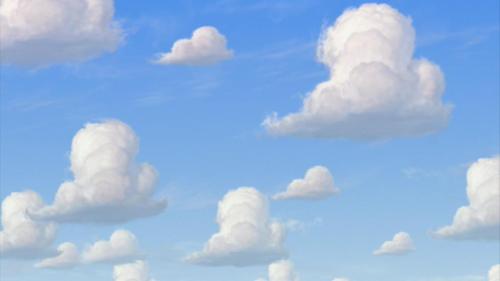
I tend to take a different approach. Don't get me wrong, this new Mac I'm using is perfect for writing and accessing everything I need for school and life in general; I'd be pretty helpless without it. But at a certain point, new technology has to take a backseat to the things that really matter. Toy Story 3 is a beautiful movie. I saw it in 3d and was absolutely blown away by how gorgeous it looked. However, I didn't leave the theatre thinking about the animation or the CGI - I was too focused on the incredible range of emotions that a bunch of toys had managed to stir up within me. Hell, I can't even type out this blog post without getting choked up at the thought of Andy driving away from Bonnie's house, watching as the little girl waves Woody's arm in farewell. And then that pan up, showing that the clouds in the sky are the same as the wallpaper in Andy's room from a movie made 15 YEARS EARLIER? It's perfect. Words can't even describe.
So no matter how much pressure I may feel to buy the newest editing/special effects software (sorry Arturo, I'm not paying hundreds of dollars for a tablet that I'll only use in this class) it's really comforting to know that story still comes first. When I googled "the future of animation" in hopes of coming up with something intelligent to blog about, I had no idea what to expect. Technology is only going to keep getting better, and I'm sure the industry will continue to evolve alongside it. But no matter what changes, story will remain crucial to the process of making any kind of visual medium - animated or otherwise. Precise animation and advanced technology are what made Andy look emotional as he was giving away his childhood toys; but it was what the filmmakers did with that technology that continues to effect me to this day.
As an avid Syfy fan, it is not surprising that the new show Opposite Worlds intrigued me. Even though I don't normally watch reality shows, I loved this concept. As I watched the first episode after class on Wednesday, I was very pleased with the filming and the unique style of the show. Afterwards, I was curious about the trailer that first piped up my interest. I watched it, and was taken aback by the effects and style it emulated. Here is that trailer (produced at Hold Fast; creative director: Rich Scurry):
Something that seems so simple, yet after what we heard in class, I'm sure has many layers of complexity. What I love about this trailer is the 3D feel they give to the video. As a viewer, I feel as if I have physically been pulled into the environment and can see in a 360 degree sphere the details and almost feel the atmosphere change from a sophisticated future to a barbaric past. That move around the spaces, as well as the little details, like the fire and the large touch screen monitor displayed only added to the drama and helped to create a story that I wanted to learn more about. I think this trailer is successful in creating the ultimate question: What will happen next?
This may not all have been animation or done in After Effects, but I'm excited to learn how to use these programs to add those important details in film that give atmosphere, feeling and story to a video. Whether that is opening credits or trailers, television or film, these details help intrigue audiences, and create more realistic environments.
One of my best friends is obsessed with comics so being the great friend that I am I promised him I would watch this Batman series with him this weekend. It's not that i don't like comics I just never really got that into them however this series definitely might have turned me over to the dark side.
There are 6 fast paced unique episodes to the series and what I love most is that they all are directed and written by different industry professionals (Writers: Josh Olson, David S Goyer, Brian Azzarello, Greg Rucka, Jordan Goldberg and Alan Burnett; Directors: Shojiro Nishimi, Futoshi Higashide, Hiroshi Morioka, Yashuhiro Aoki, Toshiyuki Kubooka, Jong-Sik Nam). This makes the series so interesting to watch. The reason being is that although there is a clear connection in between each episode within the story you really get to see how one idea (batman) being interpreted in so many ways. Its really quite beautiful and it really captures the essence of storytelling and how one story is unique to every viewer.
ENJOY
Welcome everyone!. The following project structure is intended to provide you with a methodology to be both specific and help you track the progress and meet your milestones. Since individual projects vary widely some points might not apply. However, you can use it as a roadmap to define/clarify your deliverables and go back to it frequently and methodically.
It has four distinct phases:
DISCOVERY
This phase helps you understand the big picture and the opportunity to achieve the main goals of your project; to take an idea from conception to completion in the most effective manner.
Brainstorming, sketch models, scenarios, analysis and feasibility assessments.
Define the requirements, scope, timeline, budget (your time and resources) and benchmarks for the project.
Requirements of Analysis:
Prioritize and validate requirements based on quality(1) and strategic factors
Determine success criteria and metrics
Define a preliminary list of production requirements.
Synthesis:
Produce a final document with the discovery result.
Develop a high-level implementation plan. (storyboard)
Present a timeline and a budget estimate.
DESIGN
During this phase, create the look and feel of the solution (style). Develop the story requirements, the creative components, the technical design and infrastructure that supports the project.
Creative Design:
Storyline
Script
Storyboard
Art Direction
Audio Design
Production Design
Technical Design:
Software requirements
Set/backgrounds/location/plates
Lighting diagrams
Special efx design
Models, textures
PRE-PRODUCTION
Develop and integrate all the creative, technical and information components.
Creative Production:
Story
Character Design
Prototypes
Graphics, 3D video/audio production needs
Technical integration
Technical Production:
Green Screen
Lighting
3D camera
Sound
System testing
Problem resolution
DEPLOYMENT
Demonstrate the solution after all final specifications and testing results.
Live environment:
Rendering
Audience Test performance and feedback
Implement promotion/communication strategies
Showtime!
That's all folks!
1-Quality: the true nature of things, the peculiar and essential character