It is relatively popular to have a scripted television show or film throw in bits of animation throughout their series or movie. I personally don't know how I feel about it. There are many examples, such as in season 2 of Unbreakable Kimmy Schmidt, in the Disney Channel show, Lizzie McGuire, or in the movie Enchanted. All of these scripted shows and films have actors and sets and a true script, but sometimes animation actually enhances the plot. In Unbreakable Kimmy Schmidt, it is only used once, when we are looking inside Kimmy's mind, and we are able to see an animation where she turn into a princess. In Lizzie McGuire, it is used much more frequently and offers an enhancement to the plot in every episode, and in Enchanted, the main problem in the movie is trying to get back into the animated world, so mixing the 2D and 3D world is a key point of the movie. Personally, I think that it should be one or the other, but critics offer that this popular choice actually plays pretty well with audiences.
Showing posts with label film. Show all posts
Showing posts with label film. Show all posts
Wednesday, April 20, 2016
Animation in Sitcoms and Films
It is relatively popular to have a scripted television show or film throw in bits of animation throughout their series or movie. I personally don't know how I feel about it. There are many examples, such as in season 2 of Unbreakable Kimmy Schmidt, in the Disney Channel show, Lizzie McGuire, or in the movie Enchanted. All of these scripted shows and films have actors and sets and a true script, but sometimes animation actually enhances the plot. In Unbreakable Kimmy Schmidt, it is only used once, when we are looking inside Kimmy's mind, and we are able to see an animation where she turn into a princess. In Lizzie McGuire, it is used much more frequently and offers an enhancement to the plot in every episode, and in Enchanted, the main problem in the movie is trying to get back into the animated world, so mixing the 2D and 3D world is a key point of the movie. Personally, I think that it should be one or the other, but critics offer that this popular choice actually plays pretty well with audiences.

Thursday, April 14, 2016
Kickstarter and Animation
Something I've been noticing recently is that more and more people are choosing to use websites like Kickstarter to fund their films. Several of these in the past year have been animated films. The problem with this is that if the project doesn't get funded it usually fades away, but if it does it tends to bring a moderate amount of success.
One example of this was earlier this year Don Bluth and Gary Goldman attempted to raise money for a Dragon's Lair film. These animators have made some beautiful films in the past including An American Tale and Anastasia. They also were responsible for the Dragon's Lair video game. However their campaign wasn't funded in time and since then I have seen little to no news about it.
A successful example that happened quite recently was a Kickstarter for an animated TV series based on the Wingfeather books. I had never heard of these books, but I am excited to see where the animated series will lead. It was also amazing to see how in a short period of time they raised over $250,000.
The use of the online community is something that I think will become much more prevalent in the future, than using loans or some other way of generating cash inflow. It is also an amazing way for the fans to become apart of the process. The incentives they give away are usually very fun, and the more money you give the better the incentives. For the Wingfeather if you donated enough you could be visited by various members of the production team.
The use of Kickstarter and other internet funding websites is incredibly intriguing and I can not wait to see how people use its power in the future to create films that they want to make.
One example of this was earlier this year Don Bluth and Gary Goldman attempted to raise money for a Dragon's Lair film. These animators have made some beautiful films in the past including An American Tale and Anastasia. They also were responsible for the Dragon's Lair video game. However their campaign wasn't funded in time and since then I have seen little to no news about it.
A successful example that happened quite recently was a Kickstarter for an animated TV series based on the Wingfeather books. I had never heard of these books, but I am excited to see where the animated series will lead. It was also amazing to see how in a short period of time they raised over $250,000.
The use of the online community is something that I think will become much more prevalent in the future, than using loans or some other way of generating cash inflow. It is also an amazing way for the fans to become apart of the process. The incentives they give away are usually very fun, and the more money you give the better the incentives. For the Wingfeather if you donated enough you could be visited by various members of the production team.
The use of Kickstarter and other internet funding websites is incredibly intriguing and I can not wait to see how people use its power in the future to create films that they want to make.
A$AP Rocky - JD
Wednesday, April 13, 2016
Opening Title of Deadpool
Through advanced CGI and visual effects, the opening title sequence of Deadpool was one that was extremely memorable. It was a jab at basically every superhero movie that gave an insight as to what the film's total atmosphere would be like. A great opening title sequence, like Deadpool's is key to making the film entertaining to its' viewers. There were a lot of logistics and intense thought put into this opening sequence that made the distinct 3-D visual effects and placed them into an atmosphere that was able to be manipulated into looking like a frozen fight scene for a lengthy amount of time. There were various levels of preproduction that went into making this opening title one to be competed with.
Check out the creation of it:
Monday, April 4, 2016
VFX Before and After
This is a cool video I came across on Facebook earlier today which shows the evolution from green screen to the big screen. I think it's really awesome to see how a scene was shot versus how it ends up being presented to the audience. I feel like a lot of times we take things for granted and don't think about the work that was put in to make film happen and this video helps to point out that work.
https://www.facebook.com/dima.koslowski/videos/871221469654052/
https://www.facebook.com/dima.koslowski/videos/871221469654052/
Thursday, March 31, 2016
Sound.
Unfortunately for me sound
isn’t terribly important within my creative or production process even though
it consists of 50% of my final film. Sound plays a tremendous role in how
people interpret your film; from the emotions the sound leads the audience to
feel as well as to also help drive the action within your film. Sound can be
used in this huge multitude of ways, yet time and time again I throw scoring on
the back burner while I continue to work on other projects. Ideally you should
spend as much time, if not more, on sound and how it works within your film
rather than saving it for the last minute to compile in so that there is
something backing your film. What really alarms me is the fact that although I
acknowledge the importance of sound and it’s effects within film, I still don’t
take the initiative to work on the sound when I really should. Although this
isn’t directly related to animation, it still is an important topic to bring
up. First imagine your favorite animation without dialogue? (Now if your
favorite animation already lacks dialogue you are one step ahead!) If you can
imagine all the sounds that went into making that soundscape (ticking clocks,
cars passing by, footsteps etc.) and silence them to what are you limited to? A
film without sound lacks an entire layer that can be used to tell the story as
well as eve emotion. Nothing is truly silent therefore our short films
shouldn’t be either.
Thursday, March 24, 2016
Wallace and Gromit
As a kid I loved the Wallace and Gromit animated movies and am still amazed with the amount of time and effort that it takes to create films like these. Although his behind the scenes isn't incredibly specific it still gives good insight to how long even a short like this can take, two seconds per day. The attention to detail is incredible and makes stop motion an intimidating platform to approach as someone who has never taken it on before.
Thursday, March 3, 2016
Replacing the Sky with After Effects
I found this short tutorial on replacing a less interesting sky with a more visually pleasing one using in house effects. This process turned out to be more simple than I originally thought it would be and you end up with a pretty good final product. It gets slightly more complicated when you have a moving shot which then requires some simple tracking which isn't too difficult to execute. I would definitely recommend checking out this tutorial if you are looking for an easy way to replace a flat sky in your shots.
Wednesday, March 2, 2016
Loving Vincent
There's a new movie coming out called Loving Vincent, which documents the life of Vincent Van Gogh through moving paintings. It is said to be the first feature length painted film. The film was made by a team of 100 painters who designed each frame to resemble the style of Van Gogh. For each second of film there are 12 oil paintings.
Wednesday, February 24, 2016
Alice (in Wonderland?)

Think you know the story Alice in Wonderland? The popular novel written by Lewis Caroll in 1865 has been retold and adapted a countless number of times. However, there is one film adaption that perhaps is not quite as known as the rest. That film is called Alice.
Making IMDb's "Greatest Animated Films," list, Alice is a Czechoslovakian piece directed by Jan Svankmajer in 1988. Upon first watching, the film is quirky and off-putting to say the least. However, Alice is ultimately a work of stylized art.
The bizarre film employs powerful surrealist techniques in retelling this well known story. It is dark in mood, and transforms itself in wild and enchanting stop-motion animation. There is a lack of spacial continuity or relativity, which defies the boundaries of physics. Svankmajer animates just about every object and every thing to bring a chilling sense of life to the film.
The film's opening narration says the film is made for children. I'm not so sure. You can be the judge of that. Click here to watch (skip to 5 minutes to see the animation): http://www.dailymotion.com/video/x2jjkww

Monday, February 1, 2016
The Making of "Pacific Rim" Motion Graphics
One thing about motion graphics that is fascinating to me is how the initial drawings and ideas become the end product. After surfing the internet on things related to our class I stumbled upon this one which I found to be pretty interesting, although it is short I do think it's helpful for someone like me, with little experience in graphics, to see a general work flow from ideas to the final product. In this video the audience is shown in a non specific way how the artists idea's translate to the screen in the movie "Pacific Rim". Although this is not a tutorial or a breakdown of how the graphics were created, I think it gives good incite into how the artist has to prepare to combine what they are planning to create with what the director has envisioned and shot.
Thursday, January 28, 2016
Drawn to Animation
I, like many, have grown up watching some form of animation, from classic Disney and Pixar films to Spongebob. I’ve always thought about the difference in production time between two-dimensional animation and stop motion animation. The two offer completely different feels, especially two dimensional because of the vast amount of artist styles that can be employed. Well I guess the same can be said about stop motion and and three dimensional and just about any type of animation. The fact that animation can range in not only content but style as well is very interesting to me and a reason I chose to at least learn a a little about it.
I’ve always felt more connected to stop motion animation, only because my skills with a pen and pad aren’t as great as skills with a camera and figure. Growing up the animation in Henry Selick’s “Coraline” or Tim Burton and Michael McDowell’s “A Nightmare Before Christmas" has always mesmerized me and on many occasions I have thought about making them myself. (I’ve realized I might not have the patients for it, although now I’m in an animation course that will be equally time demanding.) Watching these films now I think about the movement and precision and the dedication each person these sets must have. Recently I watch the film, Charlie Kaufman and Duke Johnson’s “Anomalisa" and was completely astounded. When I first viewed the trailer I was amazed to realize that it was stop motion animation and not a live action film. (The trailer also lead me to believe the film would be taking a completely different turn than it actually did, but that’s a topic for another time.) Clearly during the film you knew the character weren’t live action humans from the line that splits the face as well as the the way the characters walk. It was a stunning film as strange as it was.
All in all, even though I seem to be stuck on stop motion, I do enjoy many different animation styles and I am excited to be learning new skills throughout the next couple months that I will hopefully develop beyond this course.
Saturday, October 3, 2015
20th Anniversary of Se7en
After watching the title sequence of Se7en in class, I was very interested to learn more about the movie and what happens so I looked it up. As I was looking it up, I came across some articles mentioning that the 20th anniversary of the film is coming up. As I was reading one of the articles, there was a YouTube video explaining the pre-production of the film, how it all came about, and then how it was filmed. The YouTuber spends most of the video focusing on the last scene in the film, the "Box Scene" explaining how the editing, sound, and the cinematography all create this fantastic mood which helps with the revealing shot, aka what's in the box. If you want to find out more about the film and how the end scene was created, watch the video! I promise it's worth watching the whole 14 minutes of it. But there are a lot of spoilers in the video so if you haven't seen it yet, or don't want to know what's in the box, then don't watch it!
Tuesday, March 31, 2015
Stumbled upon this NikeSnowBoarding short video on my Vimeo timeline, because most of us are still working on our title sequences and just playing around with fonts and such I thought this would be a good inspiration. This is a 2D piece, so I liked how they applied depth through some effects-- that i can imagine being possible on After Effects.
Let me know how you feel about it.
Friday, September 5, 2014
Standard Operating Procedure: How Pictures Tell A Story (Or Don't)
You know that feeling after the lights have come back on and you’re in that awkward blinking back to reality phase after a movie, not really sure where you are? Your head feels heavy and, no matter how long you stare at the blackness that cut in afterwards, no one is going to come and tell you “just kidding, here’s the ending you want.” It doesn’t happen often and it’s not an altogether pleasant feeling. Because sitting in that seat, you feel like you just witnessed something you weren’t supposed to. Something that was supposed to stay behind closed doors. Something that sticks in your mind, like tar. Something that latches its claws and refuses to move, an ugly creature that keeps you up at night. Something that you won’t soon forget.
For me, this feeling came after watching Errol Morris’s Standard Operating Procedure. Even now, as I write this, I’m still trying to wrap my around what I had seen. To be honest, it didn’t surprise me as much as it confirmed things I knew existed. Humanity is certainly a strange animal. For the sake of this article, I will only provide a paraphrased summary of the events that unfolded. Because in this moment, I don’t wish to talk about the movie as much as I want to talk about how it was made. I will say this though: it is something that needs to be watched with an open mind. That’s what Errol Morris does. He provides perspective. So that’s all we can go with. Perspective.
The film follows the events leading up to the “Abu Graib” scandal of 2003. In short, the United States had a series of prison out in Iraq that were used to torture its prisoners (for information). See, this concept isn’t new. And it certainly isn’t something that this country can acquit itself of. But this movie focuses itself on the details of this scandal. Because while these prisoners were interrogated, a series of photographs were taken: of those running the prison smiling and looking as if they enjoy themselves. Yet, Errol Morris provides a different take on the situation (that led to the arrest of a handful of military personnel). He provides perspective behind each image. He allows those to explain themselves. And you’re left wondering who you should believe.
It’s an incredible well-done documentary: with an overall feel of grit that meshes well with its equally dark topic. From the lighting, to the camera work, it sets up this very intense atmosphere. You almost feel like you’re the one now interrogating these people but you’re not finding any answers that make you comfortable.
Specifically, in terms of making this, Errol Morris utilizes a fascinating mix of motion graphics and animation. In scenes where the actual pictures are discussed and brought up, he gives them life. He creates these spindling maps that link together, swirl into righteous identity, and float about demanding attention. They make words that otherwise would seem boring and unremarkable, come to life in a frightening way. It’s certainly no Ken Burns.
He creates a digital atmosphere that transports us into the bodies of those who investigated these events. We feel as if these moving pictures, as they record time differences and link of clues, are doing this in real time. It's a strange sort of re-enactment that begs to be seen beyond the realistic ways we'd go about it. By using motion graphics to put up a photo or to visualize an abstract thought, Morris is able to create a scenario of discovery that follows the lead of the film.
Almost like watching a hacker makes his way through thousands of digital files during an action movie, we see exactly what these interviewees mean as they start to connect the dots. And it plays well with the entirety of the film because the point is that pictures are just two-dimensional. That every story has more than one side. And if we're not careful they can tell a story vastly different than intended. One that's dark and cruel is a sickening way.
I guess pictures do tell a story. And I guess they really don't.
He creates a digital atmosphere that transports us into the bodies of those who investigated these events. We feel as if these moving pictures, as they record time differences and link of clues, are doing this in real time. It's a strange sort of re-enactment that begs to be seen beyond the realistic ways we'd go about it. By using motion graphics to put up a photo or to visualize an abstract thought, Morris is able to create a scenario of discovery that follows the lead of the film.
Almost like watching a hacker makes his way through thousands of digital files during an action movie, we see exactly what these interviewees mean as they start to connect the dots. And it plays well with the entirety of the film because the point is that pictures are just two-dimensional. That every story has more than one side. And if we're not careful they can tell a story vastly different than intended. One that's dark and cruel is a sickening way.
I guess pictures do tell a story. And I guess they really don't.
Sunday, March 30, 2014
Ahoy there, matey!
Sick of posts regarding VFX breakdowns from MPC? Well, too bad. Get over yourself. You have no say in this matter. I'll write about these breakdowns until the day I die (or at least until the end of the semester). These videos are simply so fascinating. They show simple folk like you and I just how much work goes into the films we know and love.
This week's breakdown comes to you from MPC (Moving Picture Company)--the same as usual--highlighting some of the greatest visual effects accomplishments found in Pirates of the Caribbean: On Stranger Tides. I can confidently say the fourth Pirates installment is by far the worst film of the series, but it's impossible to overlook the spectacular visual effects.
What's so fascinating about this particular breakdown is just how much of the highlights was news to me. I know that's not much of a surprise, but isn't that the true indicator of a job well-done? Not knowing something was actually added in postproduction means it was truly done with skill and precision. I was confident the majority of the effects displayed in the video were shot on-scene. Sure, I know Johnny Depp couldn't have possibly jumped from a couple hundred-foot high cliff into a rock-infested river and survived (probably), but the plants he walks past are fake?! You've got to be joking.
Apparently Barbossa's peg leg is fake, too. I guess everything I've ever known to be true is just a lie. It's an unfortunate discovery, but I'll just have to learn to live with the sad, sad truth. It's strange, really. One of Barbossa's biggest defining traits is his wooden leg, and it turns out it's been animated the entire time. It just goes to show how much of an impact animation has on individual characters as well as the entire layout of a film.
Gary Brozenich led the MPC team on Pirates of the Caribbean VFX supervisor. Having spearheaded other projects such as The Lone Ranger and Wrath of the Titans, he certainly was a good pick for the job. I'm sure he'll have other great work for us all very soon.
I've said it before and I'll keep saying it: MPC is doing some amazing work and they need to be recognized as a leading visual effects company. Now, I shall leave you all with this compilation of unbelievably cute puppies.
 |
| Before |
 |
| After |
Apparently Barbossa's peg leg is fake, too. I guess everything I've ever known to be true is just a lie. It's an unfortunate discovery, but I'll just have to learn to live with the sad, sad truth. It's strange, really. One of Barbossa's biggest defining traits is his wooden leg, and it turns out it's been animated the entire time. It just goes to show how much of an impact animation has on individual characters as well as the entire layout of a film.
Gary Brozenich led the MPC team on Pirates of the Caribbean VFX supervisor. Having spearheaded other projects such as The Lone Ranger and Wrath of the Titans, he certainly was a good pick for the job. I'm sure he'll have other great work for us all very soon.
I've said it before and I'll keep saying it: MPC is doing some amazing work and they need to be recognized as a leading visual effects company. Now, I shall leave you all with this compilation of unbelievably cute puppies.
Monday, March 17, 2014
Monsters University
I really like it when trailers give you meaningful insight into the plot of a film. It's something that is extremely helpful in picking out what to see; movie trailers now, on average, are around two and a half minutes in length and usually give viewers the funniest lines, coolest moments, and main plots points of the film. It's annoying. Sometimes. This is why I find it so refreshing when I find a trailer that manages to pique my interest while simultaneously giving me something great to look forward to, but not giving me the greatest parts of the film.

I've always thought that this was a great marketing tactic. It usually succeeds, at least, in getting me to do a little more research on the films to learn a bit more about it before I go to see them. This trailer did exactly that for me. Monsters University is a prequel to the 2001 animated Pixar film, Monsters, Inc., which was written and directed by Pete Docter. The plot summary, in one sentence via IMDB, is this: "A look at the relationship between Mike and Sulley during their days at Monsters University -- when they weren't necessarily the best of friends." Ok, now you've really got my attention. Haven't Mike and Sulley always been friends?
The company behind the film, Pixar Animation Studios (which--fun fact--originally only catered to American government agencies and the medical profession) is the same company behind Up and the Toy Story series, two really great--and kind of emotional--animated projects. The director, Dan Scanlon, has worked as an animator on Joseph: King of Dreams and The Indescribable Nth. He also worked as a storyboard artist for the Pixar film, Cars.
With a cast that includes Billy Crystal, John Goodman, and Steve Buscemi, I'm glad I went out of my way to see this film last summer. It was certainly one of the best animated movies of 2013. I'm sure you didn't hear it here first.

Case in point with one of the trailers that's been around for an animated movie since last summer, Monsters University. 75% of the trailer is basically an "introduction" video; each of the main characters telling us who they are, what they do, what they want to become, things like that. It's insightful, and a way to show audiences the faces of characters that they'll be seeing in the film while actually giving audiences something to work with, but still managing not to give anything important away. The entire trailer gives you pertinent information that a viewer needs in order to make an educated decision on whether or not to see the film, but doesn't ruin the story for you in any way.
I've always thought that this was a great marketing tactic. It usually succeeds, at least, in getting me to do a little more research on the films to learn a bit more about it before I go to see them. This trailer did exactly that for me. Monsters University is a prequel to the 2001 animated Pixar film, Monsters, Inc., which was written and directed by Pete Docter. The plot summary, in one sentence via IMDB, is this: "A look at the relationship between Mike and Sulley during their days at Monsters University -- when they weren't necessarily the best of friends." Ok, now you've really got my attention. Haven't Mike and Sulley always been friends?
The company behind the film, Pixar Animation Studios (which--fun fact--originally only catered to American government agencies and the medical profession) is the same company behind Up and the Toy Story series, two really great--and kind of emotional--animated projects. The director, Dan Scanlon, has worked as an animator on Joseph: King of Dreams and The Indescribable Nth. He also worked as a storyboard artist for the Pixar film, Cars.
With a cast that includes Billy Crystal, John Goodman, and Steve Buscemi, I'm glad I went out of my way to see this film last summer. It was certainly one of the best animated movies of 2013. I'm sure you didn't hear it here first.
Monday, February 17, 2014
How much of what we watch is real?
Through many hours of YouTube scouring and fact searching, I can confidently state one thing: so much less of what we think is real in movies actually is. My mind has been sufficiently blown by the countless examples of where visual effects have replaced what I truly though had been shot on-set. Usually, one can tell what can be realistically recorded on a camera and what is produced by a computer. Well, as it turns out, that's not entirely true.
Take The Avengers for example. Now, clearly very much of the film is computer-generated. It's obvious. Unless there was actually an alien invasion that recently happened in New York City that I wasn't aware of, I think it's safe to say that the large majority of this invasion was created through the use of visual effects. What I had no idea, though, was the fact that pretty much the entire city itself was also created after the original shooting of the film. Seriously, take a look:
Take The Avengers for example. Now, clearly very much of the film is computer-generated. It's obvious. Unless there was actually an alien invasion that recently happened in New York City that I wasn't aware of, I think it's safe to say that the large majority of this invasion was created through the use of visual effects. What I had no idea, though, was the fact that pretty much the entire city itself was also created after the original shooting of the film. Seriously, take a look:
It's unbelievable to think that some of the only real-life things in that entire video are a couple actors in front of tiny green screens. You'd think at least some of the city landscapes would be shot on-scene, but nope! Not at all!
The Lone Ranger is another prime example of this sort of visual effects use. Now, personally speaking, I feel like the large-scale use of effects is much more noticeable in this film, even though the animators did an excellent job with it. I'm really not quite sure how to explain why I feel this way, but there's just a feeling you get when you watch the film. Here's a highlight reel of The Lone Ranger:
I had another video that was a much better example, but it decided that it didn't want to be posted. Anyway, you can see in this video that, in many scenes, the only real things are the actors themselves. Sets seem to be becoming obsolete when they can be replaced by green screens and special effects.
Here's the link to the actual video I want you to watch.
NOW you can see how ridiculous The Lone Ranger is when it comes to special effects. While the effects aren't necessarily the most realistic-looking you've ever seen, you've gotta hand it to the animators. Led by VFX Supervisor, Gary Brozenich, the visual effects company MPC created over 550 individual shots for the film. These include anything from CGI canyons and forests to horses and scorpions.
It's crazy just how much of a film can be attributed to the countless animators who you've never heard of and exactly how much of what you're seeing on screen was actually shot on-set.
Wednesday, February 12, 2014
Who makes this stuff anyway?
Hey you. Yeah, you with the face. Ever wonder who exactly is behind the visual effects from your favorite movies or commercials? Well if you haven't, that's unfortunate. If you have, however, then the search is over.
MPC (Moving Picture Company) has been one of the global leaders in visual effects for over 25 years, and it doesn't seem that they'll be out of the game anytime soon. With facilities in London, Vancouver, Montréal, Los Angeles, New York, Amsterdam, Bangalore, and Mexico City, MPC is a powerful group that's stationed around the world. In addition to being one of the world's leaders in visual effects, MPC also specializes in concept design, shoot supervision, software development, color grading, and many other aspects of a production.
Man of Steel, World War Z, Life of Pi, and Prometheus are some of MPC's more recent successes that you probably know. I mean, really, how would you not? These are just a few of the company's unbelievable projects where they have gone above and beyond the norm. Take a look. I bet you won't be able to only watch part of the reel.
MPC (Moving Picture Company) has been one of the global leaders in visual effects for over 25 years, and it doesn't seem that they'll be out of the game anytime soon. With facilities in London, Vancouver, Montréal, Los Angeles, New York, Amsterdam, Bangalore, and Mexico City, MPC is a powerful group that's stationed around the world. In addition to being one of the world's leaders in visual effects, MPC also specializes in concept design, shoot supervision, software development, color grading, and many other aspects of a production.
Man of Steel, World War Z, Life of Pi, and Prometheus are some of MPC's more recent successes that you probably know. I mean, really, how would you not? These are just a few of the company's unbelievable projects where they have gone above and beyond the norm. Take a look. I bet you won't be able to only watch part of the reel.
The company has made some spectacular accomplishments in the world of visual effects. MPC is currently working on countless projects including Godzilla and Game of Thrones (a personal favorite). Aside from films, the company has taken part in the creation of numerous advertising campaigns such as Coca-Cola and Lexus.
I'm not sure if it's the music or the visual effects that have got me amped, but either way, that's some amazing work right there. I guess it just takes a montage and some exciting music to make you realize how much great work is put into certain projects. That's not to say the effects aren't good enough to be noticed on their own, but it's just that a person wouldn't typically stop and think about them.
I don't mean for this to be a post where I shamelessly advertise for some company. No, they didn't ask me to do this. It would have hopefully been written much better if they did. I just think the proper people should be given credit where credit is deserved. Also, apparently MPC is working on this:
And that just looks dope.
Tuesday, February 4, 2014
Who needs good special effects when all you want is a laugh?
Enough with the posts about excellent special effects work. Let's see some bad stuff for a change! Discussing an animator's great work is always a good time. It makes for intelligent, interesting conversation. You know what's even more fun, though? Discussing some terrible work that should have never happened.
The video doesn't just highlight a bunch of cheap, poorly executed CGI. No. It makes sure only to include examples from reasonably large-budget films--films where this kind of special effects should have never been tolerated. Now, to begin, I think we all can agree that good special effects are ones that do not distract the viewers from a film, but serve only to further draw the viewer into the story and overall experience. Basically, you shouldn't be focusing on the effects, but should merely be enjoying its company. It's kind of like that friend you sit next to in class. If they're a good friend, they'll answer some of your questions and help you when they can. If they're a bad friend, they'll simply distract you from the lesson.


Next up on the list are the zombie-like creatures from I Am Legend (2007). There's really not much to say about this one. The zombies--or "Dark Seekers", as referred to in the video--simply don't look good. Now, I understand zombies aren't supposed to look attractive or anything, but they simply don't look like I would have imagined. As mentioned in the video, actors with make-up could have much more easily and "realistically" portrayed the creatures in the film.
The eighth worst CGI job is the deer attack from The Ring 2 (2005). Just watch the video and come up with your own opinion. I don't even want to talk about it.
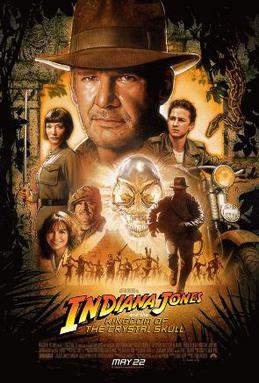
Number 7 in the video is the scene from Indiana Jones and the Kingdom of the Crystal Skull (2008) where Shia LeBeouf swings through a forest with a bunch of monkeys. Let me just begin this one by saying I despise this film. It does a terrible injustice to the Indiana Jones franchise and mocks Harrison Fords talent and reputation. That being said, the special effects are one of the driving forces that pushed the film right into the trash. Starting with the very first shot of the film, a terribly animated gofer welcomes us to the train wreck. Later on, we watch LeBeouf "swing" through the trees with some of the least convincing monkeys I've ever seen. The film's main story was already flawed to begin with. The special effects certainly didn't help the cause.

The next featured film is the newest King Kong (2005), more specifically, the Brontosaurus stampede scene. Now, I will admit that this specific scene is definitely not the best one I've ever watched, but in the context of the rest of the film, I'll allow one screw-up. The King Kong remake contains some of the greatest and the most inspiring special effects I've ever seen. There's really no other way to describe the rest of the film than as breathtakingly gorgeous. Normally, I'd say that's all the more reason to make every scene just as good as the last, but I'm prepared to make an exception.
The number 5 CGI screw-up comes to you from Die Another Day (2002). Pierce Brosnan attempts to out-surf a tsunami created by a heat ray from outer space. There's nothing else to be said.
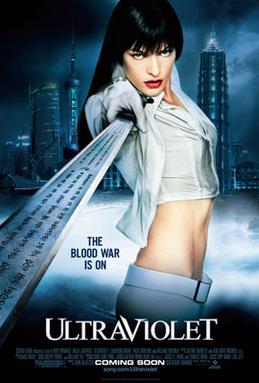
The number 4 worst CGI movie effects can be found in Ultraviolet (2006). First off, having come out a couple years later than quite a few other films on this list, it would be expected to have better special effects than some of the others. Well, it certainly does not. Ultraviolet has some of the worst special effects I've ever seen. Seriously. It's terrible. The scene that's highlighted in the video is a motorbike chase that happens at some point throughout the horrible 88-minute film. It appears as though the motorbike isn't even moving forward at times due to the unbelievably two-dimensional CGI. The effects could arguably be compared to those from the original PacMan.

Next on the list is the car crash from Along Came a Spider (2001). Somehow, getting shot in the leg causes a murder suspect to unnecessarily slam his car into a highway guardrail which subsequently sends the car flying across the highway, slamming it into another guardrail and off a bridge. First of all, the CGI was simply terrible. Just go ahead and take a look and you'll understand. Second, as the mysterious voice mentions, the physics are all off. You'd never really think about it if it's done correctly, but, as humans, we can easily detect when special effects' physics are off. Something about it just seems unnatural. This scene is a perfect example of that.

The second worst CGI movie effects are pretty much throughout the entirety of Catwoman (2004). Again, it's not one that needs much explaining. Instead of using an actual actress or stunt double--or at least half-decent special effects--the film uses a terribly CGI-ed Halle Berry in pretty much every scene. As the narrator so cleverly pointed out, the make-up artists used quite a bit of cover-up on Berry in order to hide the awfully undetailed CGI Catwoman.
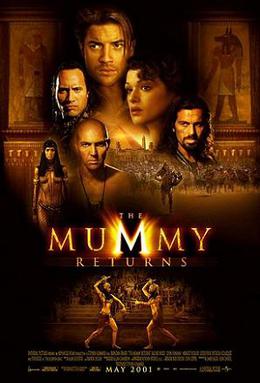
Finally, the moment you've all been waiting for (unless you've actually watched the video, in which case there was absolutely no need to read this monstrosity of a post). The very worst CGI movie effects are brought to you by the Scorpion King in The Mummy Returns (2001). It's a real shame, too. I really enjoy this movie. Even as a kid, though, I could tell something was very wrong with the ever-so-feared Scorpion King. If you've ever seen the film, you know that the monster is played by an horrendously CGI-ed Dwayne "The Rock" Johnson. Up to the climax of the film, nothing really stands out as a terrible special effects job. It's unfortunate that the animators decided to give up on what should have been the most exciting scene of the entire film. I guess it just shows that not everyone is necessarily great at his job.
First of all, I'm truly sorry how long-winded this post was. I just thought the video was funny and deserved some exploration. I'm also sorry if you read the entire post. I wish you had more important things to do with your day than to read one of my online rants. On another note, if you do have something more important to do, go do it. Stop wasting your time. Be productive, you bum.
The video attached to this post shows some of the worst CGI movie effects that can be found in some decently high-budgeted. While I do not necessarily agree in saying that all of these belong in a list containing the top 10 worst CGI jobs, some examples are certainly spot on. There is a lesson to be learned here: if you have the budget for quality special effects, use it.
Subscribe to:
Posts
(
Atom
)