Showing posts with label Christopher Nolan. Show all posts

Sunday, November 8, 2015

Interstellar black hole

Working together with a prominent astrophysicist (Kip Thorne), the film's visual effects team created what may be the first scientifically accurate display of a black hole on the big screen. To fully realize director Christopher Nolan's vision for "Interstellar," visual effects studio Double Negative was tasked to "produce images of things that aren’t even in our dimension, and furthermore have them accurate to not only quantum physics and relativistic laws, but also our best understanding (guess) of quantum gravity.”
Thorne shared his knowledge of black holes, and how he envisioned they would appear. Instead of the typical movie version of a black hole, which is depicted as a breach within space, Thorne’s research indicated black holes might be more like three-dimensional spheres. The physical appearance of Thorne's black holes is colorfully described in an interview with Paul Franklin in the Warner Brothers behind-the-scenes video "Interstellar: Building A Black Hole" (below):


Wednesday, May 27, 2015

Interstellar: The Making of Tesseract

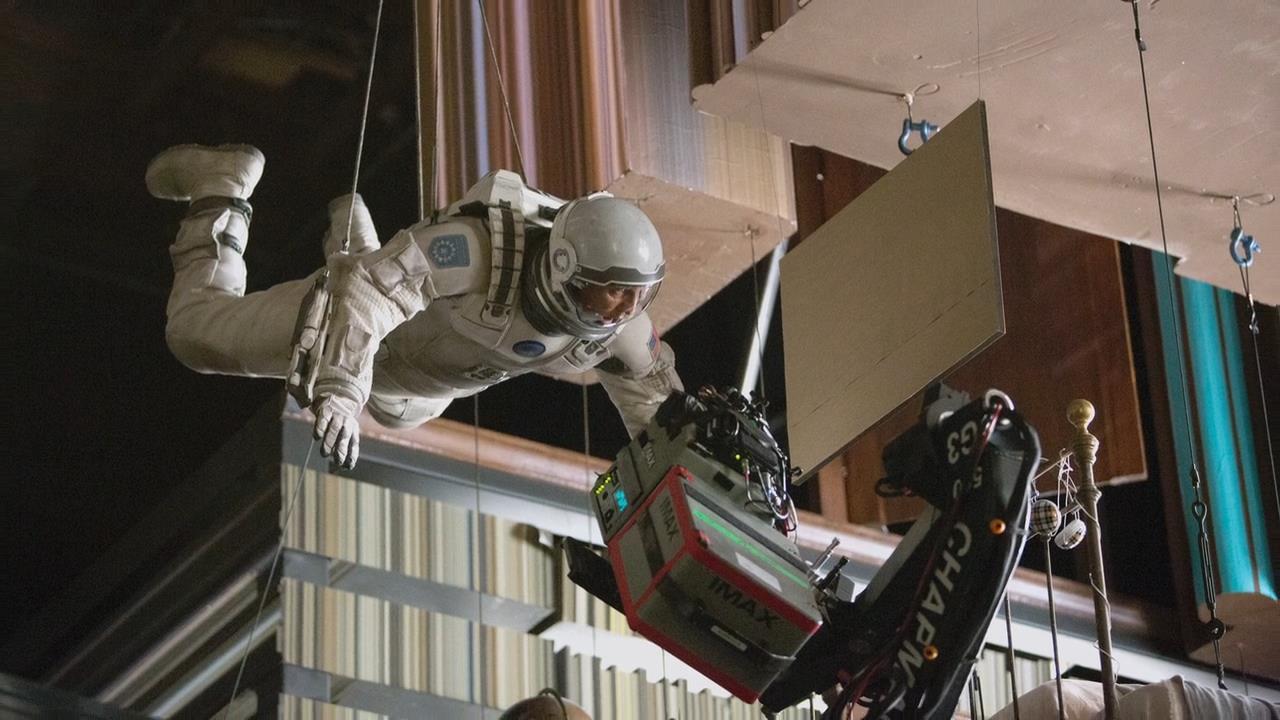
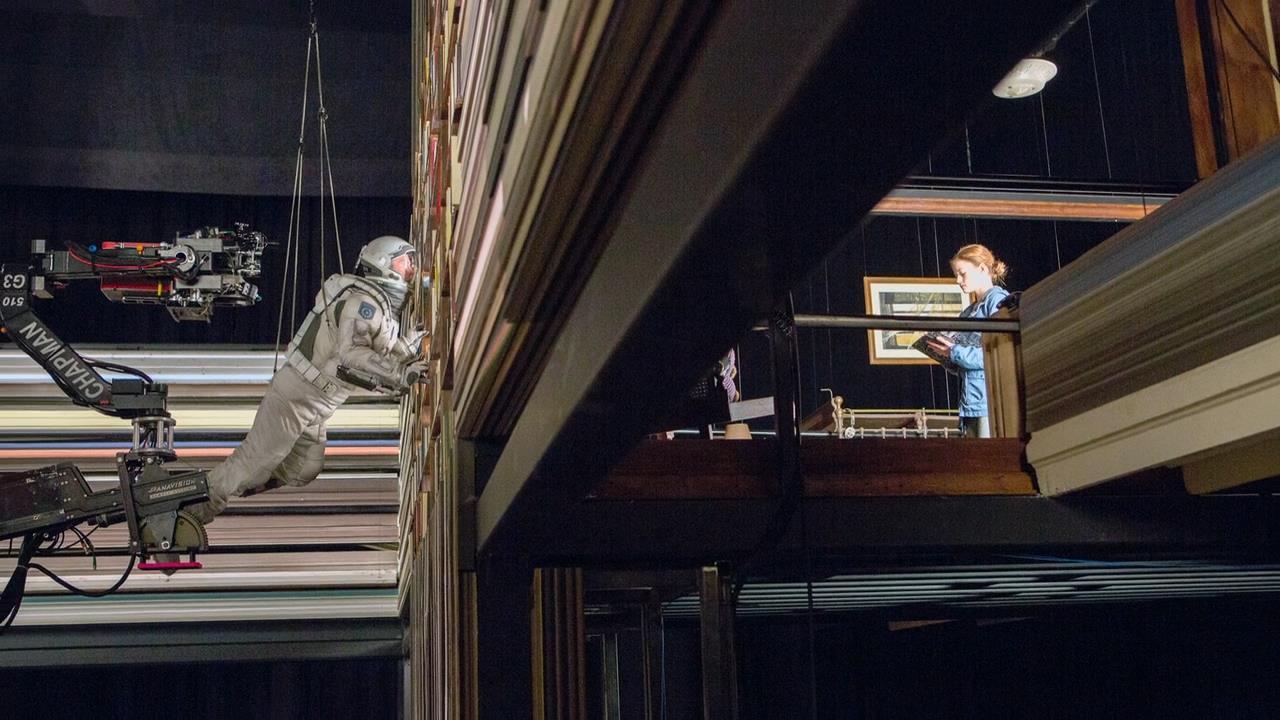
Today I came across another post about the CGI used in the film Interstellar, however, this time it was showing how surprisingly little CGI was used.

Warning: Spoilers Ahead. 

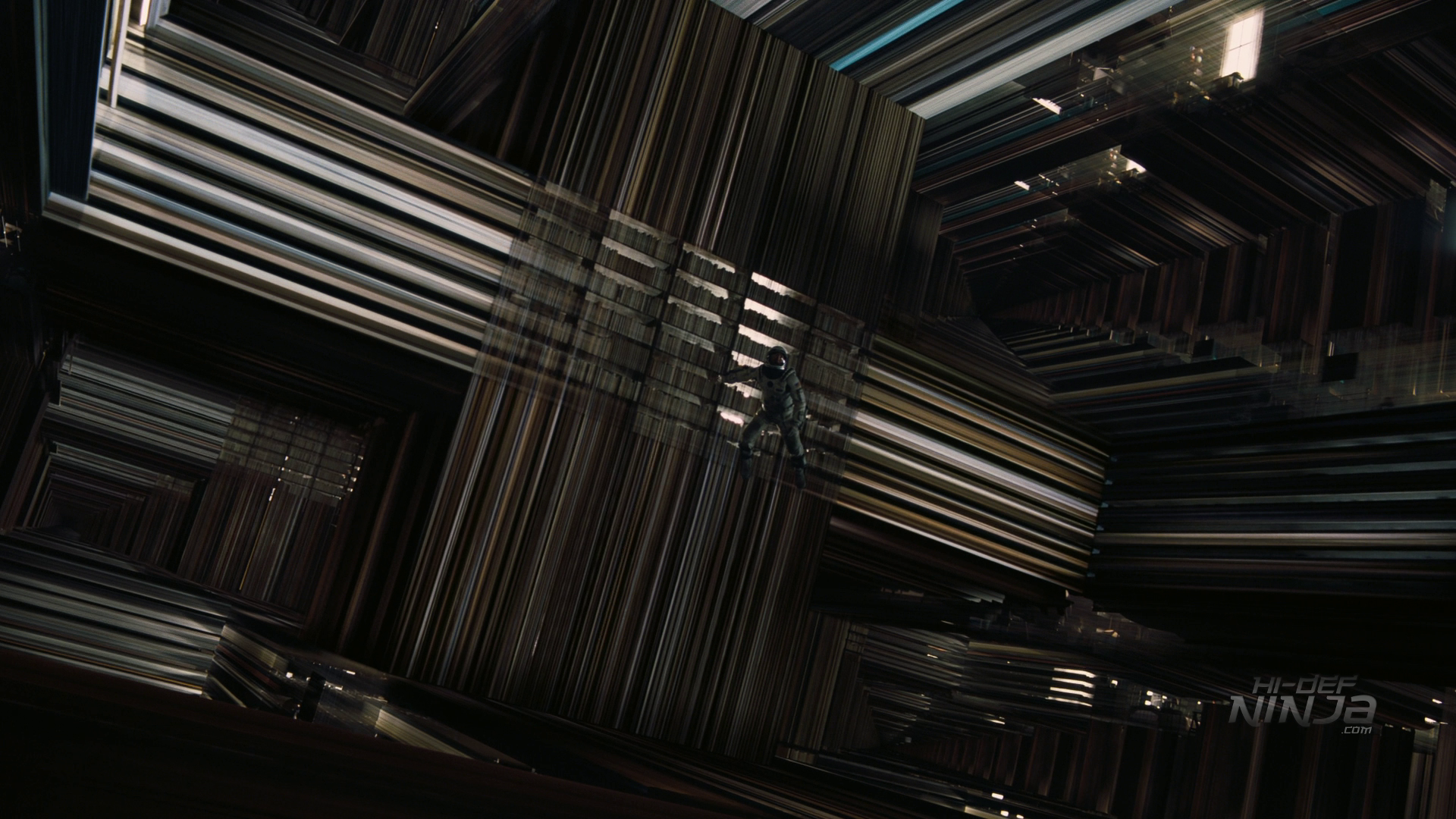
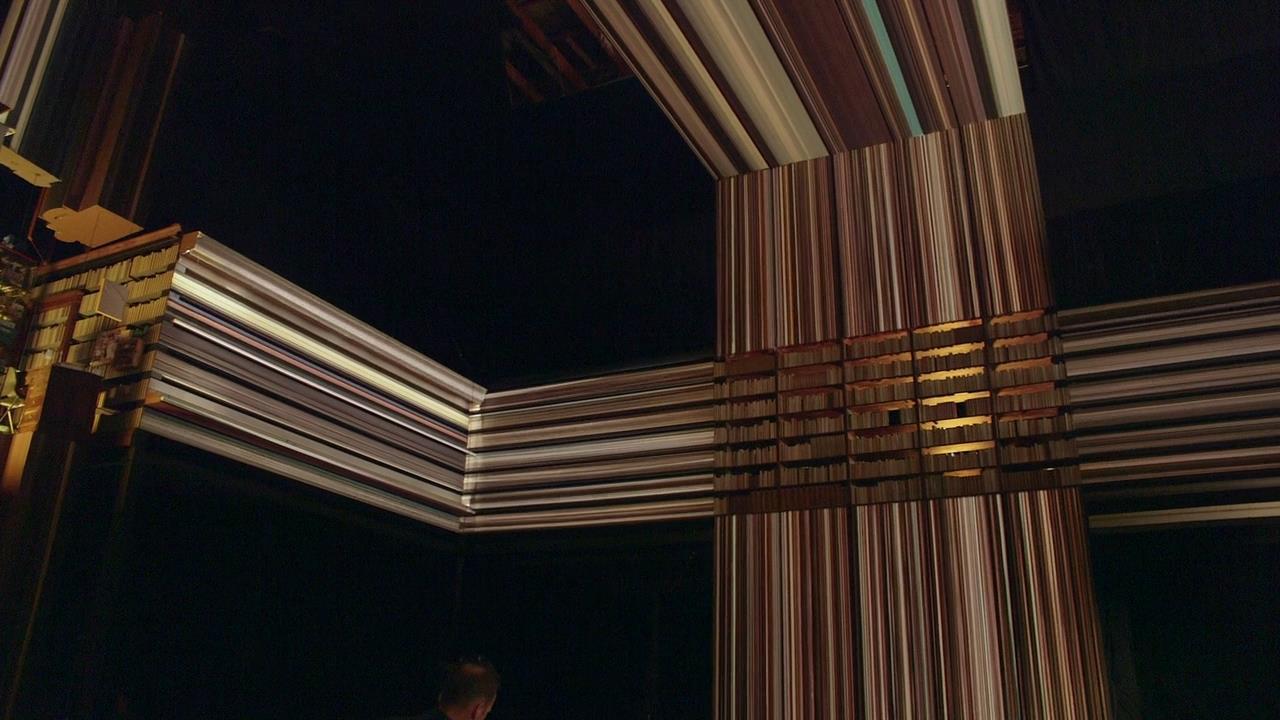
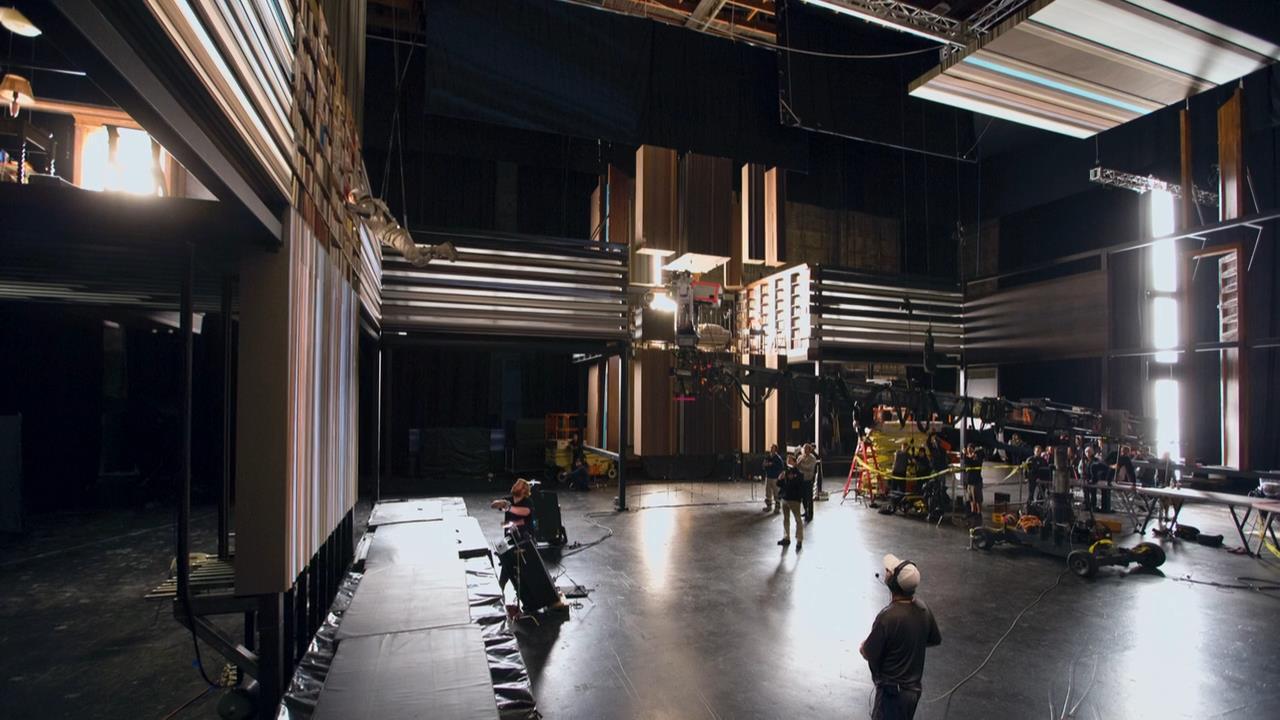
In the movie when the main character reaches the center of a black hole he finds himself suspended in time, trapped behind a window, gazing into the past. In this scene he is floating with bookcases surrounding him in a infinite-like pattern.


Anyone would be justified to assume the majority of the set was computer generated; it was. But surprisingly, a good amount of it was actually physical. Below are behind-the-scene shots of the actual set. Thanks to TheFilmStage.com 


I love being able to see the behind the scenes shots of sets and thought these were worth sharing. 

Monday, April 28, 2014

Title Sequence: My haves and have nots

As everyone currently taking this class (Motion Graphics and Animation) already knows, we are all currently working on our very own title sequences. Some of you are "done", some of you are "almost done," and some of you are beginning to panic that there's no way your project will be handed in on time. The reason for having 'done' in quotes is due to the fact that no project is ever actually finished. More can always be done.


For my project, I decided to make an opening title sequence for Christopher Nolan's The Dark Knight. The film doesn't actually have its own opening sequence, so accidentally copying the original hasn't been an issue at all. The image above is actually a screen shot taken from the end of my sequence. I don't mean to toot my own horn or anything, but it looks pretty good if I do say so myself. Just like a movie trailer, though, I really only like to highlight the best aspects of my work. What I really want to do is put out my successes and failures with this particular project in writing. Why? I have absolutely no idea.

Let's start from the beginning. Now, I'm writing this post on Monday, but the project is due on Wednesday. Some faults I write about may be fixed by the time I submit the title sequence (probably not). As I was saying, the first noticeable issue with my sequence spans over the first 30 seconds--yes, it's a pretty big problem. The problem is that there's simply too much empty space. As the production companies' names are displayed, there's probably about five seconds of black between each of them. It's a bit boring and needs to have something there to kill the time. The idea of somehow incorporating the bat theme into this section of the sequence was given to me, but I'm not quite sure how I'd do that. Maybe just some audio? I don't know. The good part about the opening is that it's clean and simple. It looks good and it gets the job done.

The second part of the title sequence is a bunch of Sure Target. Again, it's really simple. I find that totally OK for this section, though. Each name that appears is matched to the music. They come and go on beats and no name sits there for longer than two or three seconds. The pace is certainly much faster than the opening. I was also able to work with a light that really added to the feel of the sequence. I parented the light to the Sure Target camera, which gave more of a focus to the field of view, and added a blue tint to it to match the color scheme of the film. I also messed around with the depth of field to give a greater sense of focus for viewers. This part of the sequence is definitely simple, but it has a bit more artistic value to it than the opening of the sequence.

As the sequence comes close to the end, I needed to find a good transition to move from the name credits to the movie title and bat symbol. Since, after all, the guy's name is Batman and the character's disposition largely stems from his phobia of bats, I figured there must be a way to incorporate the creatures into the sequence. What I ended up doing was using the bats as a sort of wipe transition. I keyed out the background of the video I found on YouTube and colored the layer so the bats were a dark gray instead of black (don't want them disappearing into the background, now do we?!). I have yet to add any bat sound effects--which will definitely add to quality of sequence--but I'll get to it eventually.

The closing of the title sequence is certainly my favorite part of the entire project. As you can see from looking at the first image in this post, it's clean and just looks really damn good. The bat cleanly drops from off screen and the actual title fades up on a beat (which is pretty awesome). The best part about the closing take place in the last couple seconds. What I basically did was made the title and bat become engulfed in black. It's pretty awesome if I do say so myself. To really make it look like it was disappearing into the blackness, I added a quick blur with a couple keyframes to the title and then dropped the opacity once the bat was completely covered so the text would completely disappear. It's a simple concept, I know, but that didn't make it any easier for me to figure out, so I'm quite proud of it.

Overall, I'd like to say I'm proud of this final project. It's not perfect, by any means, and it needs a lot of work. I'm happy with what I hope the final product will be, though, because it really showcases what I've learned this semester (which is a whole lot more than I knew four months ago).

Wednesday, April 9, 2014

Real Special Effects

If you're like me, you've probably been fairly overwhelmed the past few months by the daunting piece of technology that is After Effects. Sure, it's capable of creating spaceships and monsters and making it look like you're in cool Martin Scorsese movies, but it also has the power to make you look like you have absolutely no idea what you're doing (like when your stupid birds flap their wings but don't actually fly anywhere). It can be frustrating, but also really rewarding.

However - as some posts have pointed out in the past - there are ways to work around the frustrations of After Effects: one of those ways being to perform real special effects instead of using a computer to generate them. I've written posts about how many films (some that you'd never expect) utilize CGI in their post-production process, but this post is about exactly the opposite. There are many films out there - looking at you, Christopher Nolan - that use far less CGI than has become the norm, and instead decide to stick to more "practical" (yes, I put that in quotations for a reason) special effects. Here's a list of a few movies that really surprised me.

1. Inception. I knew that the infamous 'rotating hallway' scene was done without the use of CGI, but I had no idea that two other key scenes in the film were made this way as well. There's one point where Leo Decaprio stands in a dream-world Japanese house, when all of a sudden, water comes crashing through the windows. Turns out, they had giant water cannons outside of the windows, and actually blasted Leo with 3,000 to 4,000 gallons of water. Likewise, the cafe explosion was done with practical effects: the filmmakers put air cannons around the actors and blew up the set surrounding Leo and Ellen Page.

2. Mission Impossible: Ghost Protocol. There's a scene in the movie where Tom Cruise's character climbs the Burj Khalifa - the highest man-made structure in the world. Obviously fake, right? Well, knowing Tom Cruise, maybe this one's actually somewhat believable. Instead of creating a fake tower, the filmmakers let a man with a net worth of 250 million dollars literally run down the side of building hundreds of feet off the ground. That's dedication, no matter how insane.

3. Skyfall. I don't know what it is with dudes playing spies/special agents, but they have a penchant for doing their own stunts. In the newest James Bond movie, Daniel Craig was actually on top of a speeding train, attached with nothing but a super thin wire. They also - this one really got me - actually crashed a subway train through a wall. Craig was added into the scene via greenscreen later (for obvious reasons, I think.) In fact, the only major special effects used in the movie were the blowing up of MI6 and the scene where Bond fights off a Komodo Dragon.


Unfortunately, if you're like me and overwhelmed with After Effects, you can't just say "screw CGI, let's go crash a real train through a wall." That's something that Hollywood can do, not a broke college student who steals cutlery from the dining hall. Practical effects are amazing: I think they'll always trump computer generated effects when it comes to looking realistic, because...they are. However, you have to take the good with the bad, and, like Daniel Craig, understand that you while you may be able to derail a subway train, you don't necessarily want to be there when it happens. That's where After Effects comes in.

To see these examples and more, visit check out the original posts from Cracked.com here and here.

Thursday, March 20, 2014

Inception

 Inception the movie is one of the most mind bending movies in are life time using dreams and different dimensions  Christopher Nolan used little computer-generated imagery, preferring practical effects whenever possible. Nolan said, "It's always very important to me to do as much as possible in-camera, and then, if necessary, computer graphics are very useful to build on or enhance what you have achieved physically."Paul Franklin visual effects supervisor built a small mountain fortress set and then blew it up for the film. For the fight scene that takes place in zero gravity, he used CGI effects to subtly bend elements like physics, space and time." By creating real models of the cityscapes and the water flowing through the buildings made the special effects have more depth and look more realistic. 


Friday, November 23, 2012

Happy Batsgiving or Happy Bat Friday!

This week we are taking a look at a video from CollegeHumor's BADMAN series. This series has been racking the views for quite some time now on their website with videos over 500,000 views, some even have over a million views. They take scenes from Christopher Nolan's Dark Knight trilogy and parodies them, turning everyone's favorite hero into the worst version of him yet (and that means worse than the time that Batman was also Green Lantern). Here's a clip:


Just the pits, ammiright? The series uses a number of effects to make it as close to movie quality as possible, including motion tracking with fire and eye color displacement. The series' visual effects are done by a group called Gloo Studios Inc. Based out of British Colombia, this post-production/visual effects/production group has worked with a number of producers and post-production managers of broadcast content for TV and Film. They work with all styles and genres of productions, from multi-million dollar productions to indie producers and filmmakers. Their collaberation with CollegeHumor on many videos, not just including the BADMAN series, has really taken humor to the next level of online videos.