Showing posts with label computer graphics. Show all posts
Showing posts with label computer graphics. Show all posts
Wednesday, February 24, 2016
The Box Trolls

Monday, September 21, 2015
Raster vs Vector Graphics
Computer graphics that are interactive and mutable undergo mathematical transformations. Depending on user’s actions, the computer will take in that information and use different linear algebra principles to transform the image in the way the user intends. These transformations use matrix multiplication to change the graphic.
In order for computer programs or applications to manipulate images they read the image as a matrix, where each entry is a pixel value. Each pixel value is a combination of red, green, or blue (RGB) because computer screen use light, additive color.
This does not occur with vector images because they are not themselves matrices of image values. Vector shapes are matrices that are read and interpreted differently than rasterized images.
In order for computer programs or applications to manipulate images they read the image as a matrix, where each entry is a pixel value. Each pixel value is a combination of red, green, or blue (RGB) because computer screen use light, additive color.
 |
| Additive color structure |
Different programming languages have built-in libraries with functions that can be used to manipulate individual pixel values. At this point, manipulating graphics refers to filters (black and white, sepia tone, brightness, etc.) applied to images. The programs use nested for loops, or commands encapsulated within each other that run pieces of code for a given number of iterations, to comb through the elements of the two dimensional array. The types of images that would experience manipulations like photo filters are called raster graphics. These are collections of pixels on the screen and they do not have the same mathematical properties as vector graphics. Vector graphics can be scaled and not loose data or quality. This is because they are not just a matrix of pixels, they are defined by paths, curves, and end points.
 |
| Raster graphics are often photos and vector graphics are usually logos or models. |
If a raster image image1 is defined as a matrix and it is being scaled to twice its size then the resulting matrix would have duplicate data matrix . This redundancy of both rows and columns manifests itself as a pixelated image. When a high quality image is scaled down to a smaller size and saved or stored that way, the data of the image can be lost.
 |
| Example of loss of data causing pixelation. |
This does not occur with vector images because they are not themselves matrices of image values. Vector shapes are matrices that are read and interpreted differently than rasterized images.
 |
| Example of controls to make vector image. |
One area of computer graphics that heavily uses vector shapes is in logos. Logos have to reshaped and resized for different platforms and merchandise. Because vector graphics are stored as paths and points they can be translated and scaled for different programs that read in vector graphics. For example, a pamphlet made in Adobe Illustrator can read in a vector graphic and scale it to a small size without it looking distorted. Additionally, a company that creates billboards can use that same vector graphic file and feature a logo that is completely not pixelated. Vector shapes are also greatly preferred because of the multiple platforms on which media is viewed. A logo can appear crisp on a TV screen and mobile phone.
Tuesday, March 24, 2015
Ray Traced 3D
In order to get the best 3D visuals in After Affects often using Ray Traced 3D is the best option. Ray Traced 3D is when an image is made based on tracing the path of light through pixels in an image plane and making the effects based on this. This will take a longer render time but ultimately will help drastically with the realism of your design.

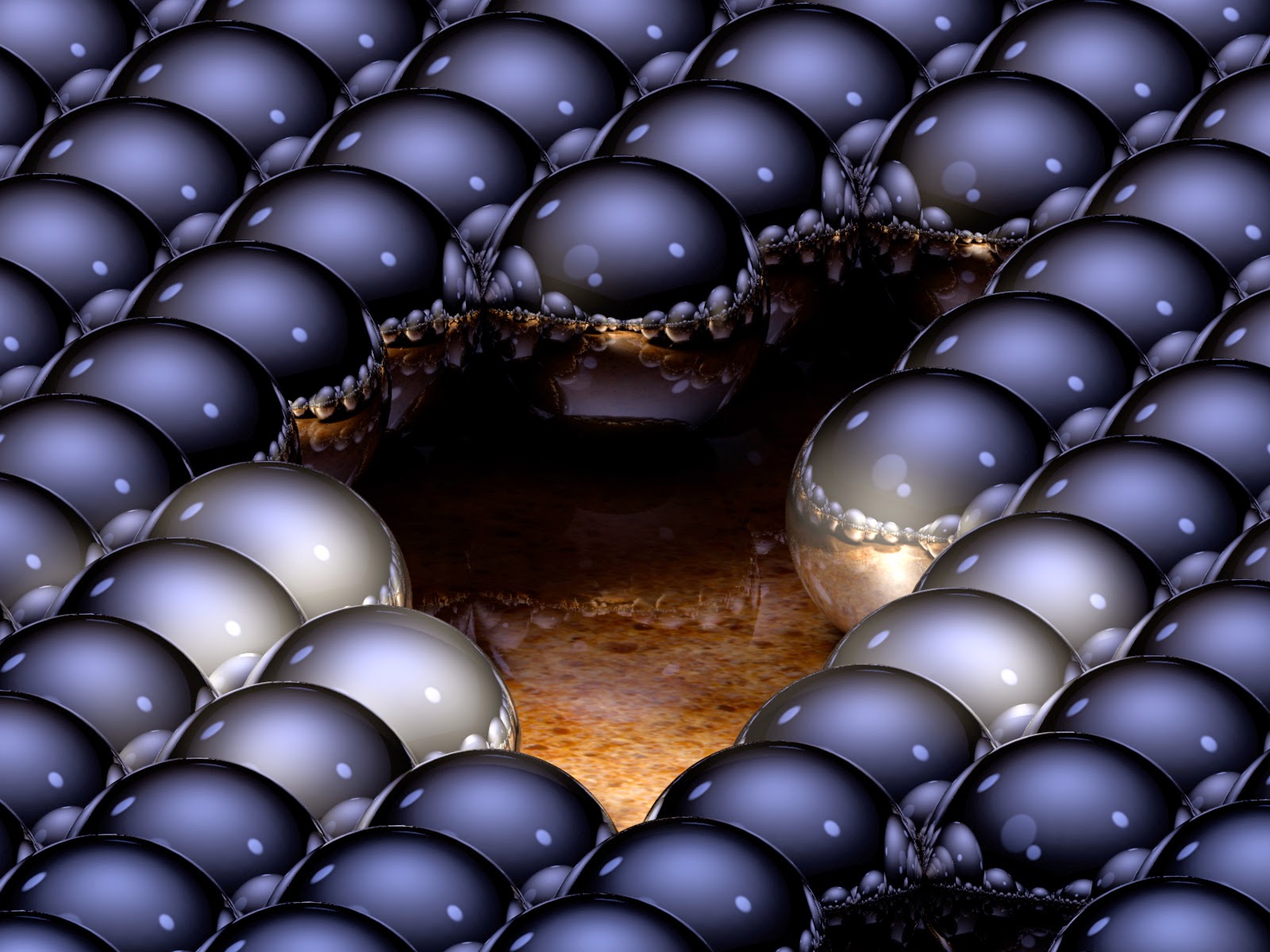

Because Ray Tracing takes a long time to render sometimes it is not optimal to use it until you have enough time to let your computer sit and render things for awhile.
In order to understand Ray Tracing one must first understand some general properties of light. once light has been emitted from a source 4 things can happen. It can either be reflected, refracted, absorbed or fluoresced. In order to have a realistic image the behavior of light within that image must be realistic as well which means including these 4 properties which Ray Tracing does by algorithm and genesis.
In the image below one can see the difference between Ray Traced 3D text and a 3D text which is not Ray Traced
Here is a helpful link to a more detailed description on this feature: Ray Tracing
Wednesday, February 19, 2014
Sticking To What I Know... Again...
So clearly I was going to another thing on CGI stuff and rendering. However, the problem with this post is that there isn't enough info online about the rendering side of things. But anyway, here we go!
The new Amazing Spider Man movie that is coming out. Clearly not all of it is live action, especially the scenes of Spider Man flying through the air swinging on his web. This is clearly computer generated. Now, to make something this crisp would obviously take a lot of computing power to create and render to its finished product. Unfortunately, I can't find anywhere how long or how much computing that would take, but I can tell you that it would be a fair amount of both.
Not only will the swinging scenes be needing a lot of the computing power, the fighting sequences will need it as well. These parts of the movie not only have super intense actions happening, a lot of it isn't actually real life and is either being used with green screen or completely animated. For example, the part where Jamie Fox is going after Spider Man and he is sort of "immersed" into the electricity field, that is clearly not real because no human can be absorbed into electricity. Kind of going off of that, the Green Goblin isn't real either because, well, we haven't exactly come up with that technology yet.
So needless to say, without getting too repetitive, a lot of these scenes are going to require a lot of time to render because of the quality of the image and how many frames are being used to capture all of the action. If you want to see the extended trailer, it's just down below.
The new Amazing Spider Man movie that is coming out. Clearly not all of it is live action, especially the scenes of Spider Man flying through the air swinging on his web. This is clearly computer generated. Now, to make something this crisp would obviously take a lot of computing power to create and render to its finished product. Unfortunately, I can't find anywhere how long or how much computing that would take, but I can tell you that it would be a fair amount of both.
Not only will the swinging scenes be needing a lot of the computing power, the fighting sequences will need it as well. These parts of the movie not only have super intense actions happening, a lot of it isn't actually real life and is either being used with green screen or completely animated. For example, the part where Jamie Fox is going after Spider Man and he is sort of "immersed" into the electricity field, that is clearly not real because no human can be absorbed into electricity. Kind of going off of that, the Green Goblin isn't real either because, well, we haven't exactly come up with that technology yet.
So needless to say, without getting too repetitive, a lot of these scenes are going to require a lot of time to render because of the quality of the image and how many frames are being used to capture all of the action. If you want to see the extended trailer, it's just down below.
Thursday, September 13, 2012
The New iPhone and iPad Look Pretty Sweet
So have you heard about the new iPhone 5's features? Some say that it will boost the economy while others say it will revolutionize technology. All of these rumors sounded too good to be true so I decided to look up videos and they are all true! The site I found even had the new features for the next iPad as well. Here, watch these links:
I have three words for you: OH EMM GEE. I cannot wait to drive an hour to Syracuse to get in the long line to wait for hours to have both of these beautiful products so that I can live forever in peace and joy until the upgraded products come out and then I have to repeat the process all over again.
Alrighty, lets get serious though. These videos were made by Aatma, an animation and digital content studio specializing in the production of imagery for television, film, advertising and interactive media. Aatma has worked on a number of projects including a joint-campaign for Brisk and Star Wars Episode 1 when it came back to theaters, as well as a handful of viral videos mostly using computer graphics. I remember watching the iPad 3 Concept video a few months ago and thinking that Apple most likely has these planned in the next 7 years or so. I recently rediscovered this video and decided to watch more videos from this studio which are just as equally as cool as these two clips. Aatma has a unique ability to make videos that look so realistic that they're believable and its all very cleverly shot and perfectly edited. I'm looking forward to future videos from them.
I have three words for you: OH EMM GEE. I cannot wait to drive an hour to Syracuse to get in the long line to wait for hours to have both of these beautiful products so that I can live forever in peace and joy until the upgraded products come out and then I have to repeat the process all over again.
Alrighty, lets get serious though. These videos were made by Aatma, an animation and digital content studio specializing in the production of imagery for television, film, advertising and interactive media. Aatma has worked on a number of projects including a joint-campaign for Brisk and Star Wars Episode 1 when it came back to theaters, as well as a handful of viral videos mostly using computer graphics. I remember watching the iPad 3 Concept video a few months ago and thinking that Apple most likely has these planned in the next 7 years or so. I recently rediscovered this video and decided to watch more videos from this studio which are just as equally as cool as these two clips. Aatma has a unique ability to make videos that look so realistic that they're believable and its all very cleverly shot and perfectly edited. I'm looking forward to future videos from them.
Saturday, February 4, 2012
Super Bowl Commercials
Since it is Super Bowl weekend and many people love watching the commercials, I thought I'd post a few new ones (that have "leaked" or been released already by the company) and old ones! Over the past two decades, graphics and animation have visually changed but the principle + usage of them have stayed the same = enhancing and improving the aesthetics of said commercials.
I have included three different commercials (1992 7-Up and 2012 Chevy are said to be Super Bowl commercials ... 1993 Chevy was only one I thought was useful). They are are not necessarily the best commercials, but I chose them because I thought there were some good(ish) examples in them!
Diet 7-Up 1992 = this Super Bowl commercial is completely created on vectors, shapes, and motion graphics. From the animated circle men, 7-Up liquid flowing, and human hand movement in the end, the whole commercial is created or enhanced by the industry-leading software (at that time). Watch it on YouTube
Chevy 1993 -- these graphics are very subtle and simple ... I had to watch this a few times to notice the actual graphic changes / After Effects (or a other program). I might be seeing it wrong, and all the supposed graphics are just simple non-linear edits. Watch it on YouTube
Chevy 2012 -- 20 years after the shown 7-Up commercial, graphics and animation editing technology have improved. Now we can ultimately create a whole new 3D, interactive, and unique world. This "2012 Mayan Apocalypse" world is most likely created via After Effects or other 3D video creation program. Unfortunately there was no "behind the scenes" or "making of" videos yet, but I would assume that they had the humans and Chevy vehicles in front of a green screen for x number of takes and then keyed in the fiery, hell, disheveled scene. Watch it on YouTube
Sunday, November 27, 2011
Disney Animations
So I was researching the techniques of the old Christmas animation classics like Rudolf the Red nosed Reindeer, Frosty the Snowman, and the Year Without a Santa Claus when I discovered a behind-the-scenes look at Disney's old animated classics.
The video above starts around the 2:00 minute mark but what really impressed me is that it took the animators and designers 4 years to draw, animate, and paint the scenes for Beauty and the Beast. The artists put pictures up on the wall of lions, gorillas, buffalo, and bears in order to inspire different parts of the Beast's image. They then created 3-D clay models in order to truly visualize the Beast in every dimension before drawing him in the 2-D frames. In the next video Don Hahn, the Producer of Beauty and The Beast, goes into detail of the hand-drawn animation process.
In order to make the filming of the hand drawn frames more dimensional, Walt Disney's MultiPlane camera was often used for the classics. But if we think of all the work that went into animating and then filming these Disney movies, the idea of creating a new animation with the computer graphics and animation techniques available is astounding. I often complain about how long it takes for an animation to render or how quickly time seems to go by when animating. But when I take a step back and look at the process of creating my favorite Disney Animated Movie, I realize that I would have started the project my Freshman year in college only to finish it during graduation.
Disney's Beauty and the Beast may have been taken from a long line of French folktales, but the animation process and finished product are something that I can't help but admire.
The video above starts around the 2:00 minute mark but what really impressed me is that it took the animators and designers 4 years to draw, animate, and paint the scenes for Beauty and the Beast. The artists put pictures up on the wall of lions, gorillas, buffalo, and bears in order to inspire different parts of the Beast's image. They then created 3-D clay models in order to truly visualize the Beast in every dimension before drawing him in the 2-D frames. In the next video Don Hahn, the Producer of Beauty and The Beast, goes into detail of the hand-drawn animation process.
In order to make the filming of the hand drawn frames more dimensional, Walt Disney's MultiPlane camera was often used for the classics. But if we think of all the work that went into animating and then filming these Disney movies, the idea of creating a new animation with the computer graphics and animation techniques available is astounding. I often complain about how long it takes for an animation to render or how quickly time seems to go by when animating. But when I take a step back and look at the process of creating my favorite Disney Animated Movie, I realize that I would have started the project my Freshman year in college only to finish it during graduation.
Disney's Beauty and the Beast may have been taken from a long line of French folktales, but the animation process and finished product are something that I can't help but admire.
Saturday, September 24, 2011
Sin City
In 2005, the movie Sin City, staring Mickey Rourke, Bruce Willis, and Clive Owen, premiered on hundreds of silver screens around the country. I remember learning that it was based on Frank Miller's graphic novel (well, more like a series of graphic novels) and I couldn't help but be completely spellbound with its animation. I had never seen another movie that had taken live action and completely transformed it to look like a comic. Most of the action is highly concentrated black and white with a few chosen colorful objects, and I couldn't wrap my head around how they could possibly do that with a film. Well its 6 years later, I have learned a few tricks and gained a little more experience in the industry, yet I am more impressed with the process they used to create the movie, as well as the techniques they used in order to achieve the detail of the original graphic novel.

If we look at the original panels from the book and compare it to the final product, we see the detail that went into the entire production design.

The costume designers were so precise that the placement of the bandages on Marv are actually in the exact same place on the book character as they were for the film character. Then if we look at the process that the artists and filmmakers used to enliven the graphic novel, we see exactly how much work had to go into the animation. Computer generated sets, color correction, and 3-D elements were just the beginning for this project.


This is just a small portion of the effects used in this movie, but if anyone feels like exploring more, Animation World Network has a full 6 pages spread dedicated to the work that went into making this graphic novel a silver screen spectacle. I would highly recommend reading it as it goes into details about the project, what they used, and how they used it to created this graphic world.
If we look at the original panels from the book and compare it to the final product, we see the detail that went into the entire production design.

The costume designers were so precise that the placement of the bandages on Marv are actually in the exact same place on the book character as they were for the film character. Then if we look at the process that the artists and filmmakers used to enliven the graphic novel, we see exactly how much work had to go into the animation. Computer generated sets, color correction, and 3-D elements were just the beginning for this project.
Everything from the white rain...
...to the black and white high contrast look of the graphic novel was CG.


After learning how to key green screens and garbage mat everything outside, I realize how simple this process can be. However, it is still an incredible amount of work for an entire movie, and to create the entire world on a computer is just incredible.
Here's another example of how much CG was used in the very first scene. Notice the color correction, color selection, texture, and set.
Before:
After:
This is just a small portion of the effects used in this movie, but if anyone feels like exploring more, Animation World Network has a full 6 pages spread dedicated to the work that went into making this graphic novel a silver screen spectacle. I would highly recommend reading it as it goes into details about the project, what they used, and how they used it to created this graphic world.
Subscribe to:
Posts
(
Atom
)