I am a huge fan of traditional 2D animation. I love how ridiculously expressive you can make the characters, and I love how you don't need to depend on the physics of the real world to make your cartoon enjoyable. When I see films like Disney's frozen I ask myself the question of "Why did this need to be animated" or rather "What is animation adding to this story". And to be frank I don't know that I've found an answer aside from the fact that having 3D models of every character comes in real handy when rolling out lines of action figures and other such merch.
It's not that I don't like 3D animation in general. I just feel that it can get so close to the look of the real world that any abstraction would severely disturb the audience watching.
Cloudy with a chance of Meatballs was a 3D animated film produced by Sony Studios that I feel captures some of the very best that 2D and 3D animation have to offer. Take a look at the clip below:
While the look of the film is undoubtedly 3D, it really does feel like you're watching 2D cartoon. The characters move erratically and emote expressively, you can see during periods of fast movement that someone has actually gone in and drawn smears and multiples into the 3D frame, and whatsmroe is that it never takes itself too seriously.
Like I said before, I don't have a problem with 3D animation as a medium, but I'd love to see it used to it's full potential.
In anticipation for the Name Project, I'd like to share one of my favourite YouTube videos. I've decided to go with a 90's VHS style effect for my project, since I love trying to mimic things in After Effects. A great example of this is the following video, in which someone cut together a 90's style opening to Game of Thrones.
There are so many things I love about this video. First of all is the look. I've tried VHS-ing videos myself, and it's a lot of fun trying to degrade the quality. However, it's not as easy as simply dropping the resolution. Film grain and scan lines need to be added. Chromatic aberration (seen in the following image) also helps achieve the look.
Also experimenting with the Fractal Noise effect in After Effects can help add the "fuzz" often seen in VHS tapes.
I also love the editing in the video. Certain shots are chosen which suit the style, and go well with the high-pass filtered music.
Here's another great example of the effect put over Breaking Bad.
Princess Kaguya is
based on a 10th-century Japanese folk story called The Tale of the Bamboo Cutter, which tells of a poor couple that
discover a mystical girl in a forest and take it upon themselves to raise her
as a princess. It is directed by Isao Takahata. Most viewers will be more
immediately grabbed by the astonishing art style. Princess Kaguya is like an old Japanese painting come
to life. The fluid animation is drawn in minimalist, evocative watercolors with
charcoal strokes. In one amazing scene, the princess Kaguya’s angry
fantasies of escaping an oppressive environment are shown in dizzying, coarse
scrawls as the character takes flight.
With the
advances in 3D, animation films are increasingly going in the direction toward
live-action style images. Yet, rather than drawing in every detail and
depicting something as if the real thing were there, paintings inherently have
the great power to stir up the viewer’s vivid imagination and memory when the
brush is used sparingly to give an impression of the real thing.
This technique
of giving expression to the line and leaving blank spaces so that the entire
surface of the painting is not filled, which engages the viewer’s imagination,
is one that holds an important place not only in traditional paintings of China
and Japan, but also in sketches in Western drawings. Takahata has attempt to
bring this technique to animation.
The first time I
watched this film was last year in Film Analysis and Aesthetics class. I
thought it was very captivating so I wanted to talk about it. I appreciate the
hand-drawn animation, it was very memorable to me.
For my blog post this week, I wanted to talk about some really cool animation techniques and the different terminology used by professionals in the field.
As we learn how to use After Effects in more depth, I think it is important to learn more about some of the other techniques used in animation. Some of these are old and some are new but they are all pretty cool.
Inbetweening: Basically inbetweening or tweening is the process of adding animation between Pose A and Pose B of a character or object. It is essentially filling in gaps between two actions. The example below demonstrates it better.
Onion Skinning: In this 2-D animation technique, onionskin paper is used to draw each frame of an animation under a light source. The frames are then placed one over the other to show the different frames. This helps the animator, mostly inbetweeners in this case, see the fluid motion of an object or character.
Moving Hold: This is an animation means that I found particularly interesting. In this technique, a character is given more dimension by making it look more lifelike. It serves to add emotion and in a way show that a character is breathing even when they are standing still. The video below shows how the Moving Hold technique is added to a character in Maya.
There's so many more techniques and means of animation that you can find online and it really shows how accurate and detailed we can get with our work.
So last week I made a post about animation that I've found on Vimeo and here I am doing it again. Specifically I posted a Walking Dead fan made intro (which I love by the way). I recently found again Al Boardman's Oscar Special Opener for The Charlie Rose Show on PBS. I felt that it was relevant to class since we have to make an opening sequence. I'll let the video do the talking.
Disney veteran animator Glen Keane recently stepped into the world of virtual reality animation and says freedom is the main takeaway. Keane has been working for Disney for 38 years, with his most famous work being 'The Little Mermaid' and 'Aladdin', and has mainly used pen and paper to create his animations. Keane voiced several struggles with pen and paper, his biggest not being able to actually step into the paper and make the 2D go away. He has always wanted to be completely immersed in 3D, not the pen and paper 2D. So when The Future of StoryTelling, an organization that aims to explore how storytelling is changing in the digital age, wanted Keane to try virtual reality animation, he couldn't say no.
Keane ended up loving the experience and finally got his wish of virtually being able to step in his paper and create real-life animations and designs of Disney characters. He was finally able to draw the characters as he sees them in his head. The actual video of Keane drawing is pretty cool to watch, it was amazing to see how he creates these animations and make them come to life. To read more about the article click here.
In this eight minute video you will meet your childhood personified. Chuck Jones, the animator for over two hundred "Looney Tunes" shorts discusses the creative development of some of the most famous cartoon scenes and characters. Hyperbolic characters such as Daffy Duck, Bugs Bunny, and Sylvester all start off with an initial desire, which comes into play throughout each episode. Jones does an amazing job of breaking down aspects of animation from movement to character themes.
I think the most important piece of advice I took away from this was discipline. Always limit your character in every way except character growth. Whether it be their color palette, emotional gestures, desires, or interaction, the simpler the character the more you can do with you design.
So for my post this week I decided to share my favorite animated TV show and my favorite animated movie.
1) Fantastic Mr. Fox
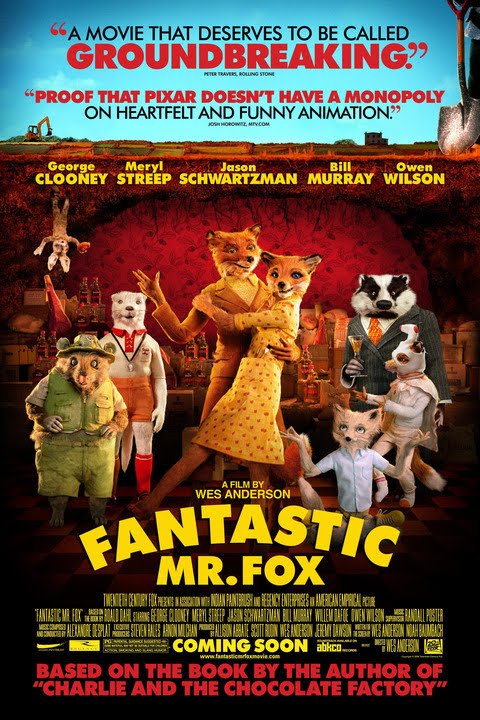
I know that this movie was in my post from last week, but I am posting about it again because I really love this movie. This is Wes Anderson's only animated movie so far, and he absolutely nailed it! This movie is so aesthetically amazing, as well as having a stellar cast and a great story. The animation in this movie is so wonderful. Every thing whether is be a tree, an animal, the hunters, a house, anything has its own energy in the film. Also the use of color in this film is brilliant, everything is so vibrant and beautiful. I also love that it is stop motion.
2) The Legend of Korra
Nickelodeon had a show called Avatar the Last Airbender which was a show in which people in this fictional version of the world could control elements through a force called "bending" each person can only control one element except for the Avatar who could control all four elements, and existed to bring harmony to the world. After the first show ended, Nickelodeon decided to reboot it. Korra is the new avatar to the same world, but with a new set of problems. This show is awesome because the animation involves people controlling fire, water, earth and air, so each of these elements has a different vibe so they need to move differently. The animators did a great job of making each element act differently. Fire was a lot of bursts and short quick movements, water was very smooth and fluid, air was light with a lot spirals and quick movements, and earth was a lot of levitating solid forms and pushing or pulling. I highly recommend this show to everyone.
I came across this website recently called Blender which is a free 3D creation suite. http://www.blender.org/
I came across this real cool CG water animation, and I was really curious to how they did it. Although you can tell it is animated, there are parts of it that look like it was real. I was taken a back by how beautiful, and cool it looks, and apparently its not as hard as it looks, and is made simple by the website Blender.
Recently Blender now uses a cycles a 3D render engine to help with creating these cool animations.
I think the possibilities that this website offers for free is amazing, and for a beginner animator like me its perfect. Some people were able to make complete movies with the use of this website only, and I thought that was pretty remarkable, here is a short film I thought that was quite impressive.
Once again, I've found myself wasting my precious life watching YouTube, spending each minute of my day with something that could easily have genuinely positive impact on my life. Yet, here we are. I was sent this animated short film by a very close friend of mine and I found myself in tangible awe.
My favourite part is easily the sound design; it really brings the viewer in and smacks you right dab in the middle of the world the film has created. It makes me a very happy viewer to hear things like footsteps or coughs from people besides the main characters. Small things like jingling keys or riffling papers are sometimes forgotten but this film seems to fill in every single nook and cranny that one could visually pick out.
They do an amazing job with the music in conjunction with the sound effects as well, satisfying every single mood change that the plot has to offer. Speaking of, the plot is also really nice and it offers a nice twist on the classic 'boy must find girl' trope and accurately represents a mental illness. And you know how I'm a sucker for good representation, am I right? The main character is adorable alone; despite the fact he's a little shit and a little criminal, you kind of fall for his little quirks and mistakes and you end up rooting for him in the end. It's cute and it's definitely worth the 11 minutes of your life. Trust me. I've got minutes to spare.
We talked about how we are soon going to start to learn about using photos of birds, and animate and composite them in our scene to make them look life its actual video of birds actually moving rather than still images. And also add smoke or any kind of atmosphere to the composition to help blend all of the layers together so that it adds a little extra something to sell the effect.
This made me think of this particular tutorial about Matte paintings. Matte paintings are images that are used to add an element to a scene that otherwise doesn't exist. These are commonly used to extend a set or add things into the background of a scene to help make the world of the story more dynamic.
In this tutorial from Corridor Digital, Niko shows us how to make a mountain appear that doesnt actually exist, using simple photos, some 3D tracking, and adding some atmosphere to help make the mountain look like it actually was there in real life.
This also basically explains how compositing is very important in the animation/visual effects/CG process, as it uses multiple elements/layers and blends them together to make one impressive final result.
3D animation takes place in a three-dimensional space with objects able to move on all three axes (x,y,z), as opposed to the the 2 axes (x,y) 2D allows.
But wait... What is 2.5D animation?
Put simply, 2.5D animation is a 2D animation in a three-dimensional space.
The parallax effect allows motion in still photographs. One can accomplish the parallax effect by taking a still, separating it into different layers, then putting those photos in a 3D space and moving a camera through it. This also involves using perspective and shadows to make those 2D objects look seemingly three-dimensional.
The parallax technique brings still images to life. It's useful when trying to replicate live footage. The following is a great example and short tutorial of how it works:
So I know this doesn't really have to do with this class but I came across this video the other day on Facebook and I found it interesting and I wanted to share it with you all. As we all probably know, Apple came out with their new iPhone the other day and everyone is freaking out about it. I honestly can't tell you why, it looks like every other iPhone they have come out with. I'm apparently not the only one that thinks that because Jimmy Kimmel decided to prank people and go out into the streets of Hollywood and tell them that the first ever iPhone is the newest one and people believed him. Take a look:
In the video the reporter asks them what they like about it and a lot of them said that it works faster and that the display is more clear. Now I don't know if they were just scrambling for answers or if they truly thought that. Either way, does technology really improve so much that we need to spend hundreds of dollars on the new fad? If everyday people are ignorant enough to think that this is the new iPhone, does it really make a difference? Like with Adobe for example, they come out with a new update every few months and what's the point? It's not like anything is different. I know the answer to this and it's all about money and marketers know that people will eat it all up. It's silly but true. I know I'm one of them!
One of my favorite kinds of motion graphics is the use of text. Previously, I had written about some awesome Kinetic Typography, but I left out the whole idea of Compositing Typography! This idea of Tracking the Cameras Movement and adding in poignant text that relates to the Message.
I find the message is much stronger when the main ideas are highlighted with motion graphics. I know I've seen this in many different places but most recently, I've run into videos by Prince Ea:
Perhaps you've seen one or two of his videos. His videos perfectly demonstrate what I was talking about. I think the paring of Text, Slam Poetry, Cinematography, and Music combine to give messages a whole new dimension.
Many of Prince Ea's major projects have been in collaboration with Motion Graphic Artist Hodja Berlev and as it turns out most of his work is in After Effects. I find what he does really fascinating, and I think getting the chance to watch over his shoulder may be one of the coolest experiences.
I think this team in general, is doing a lot of good in the world of social media, and I think that if I could just be a part of what they're doing, the experience would be awesome. I would love to help them spread the words they're saying, and maybe even help in a larger more physical way.
One of the things that I struggle with the most when creating any type of media is making a consistent design. I always end up with elements that are visually acceptable but seem segmented. This is something I hope to improve on in this course.
When I began animating in high school I was inspired by this piece of a music video that I found. I tried to imitate the music video with this video. A few years after I made this I realized why it did not look right to me. I realized that it was a mix of textures. I had flat and real elements that did not make sense together. After Effects has the ability to make awesome flat animations but is even more geared towards realistic looking motion graphics or special effects and I mixed them in my video. I would love to try to do one project that is complete flat design. I also hope to realize more design elements that I can improve on as the course continues.
When studying Flat vs Skeuomorphic design in Design of New Media I found this interactive game that exemplifies the tug between realistic and flat animation.
As we progress through learning how to use After Effects with our name animation project in mind, I thought I would make a post about all the things you can do with After Effects with a simple text layer.
This is a video I found on YouTube. The creator did all of this using just After Effects and I thought it was very interesting.
I think it is pretty obvious that After Effects has been used in many movies for some really crazy animation and motion graphics. Just going through videos I have realized what a vast program this is and how much we can learn about it by simply practicing and trying new things on it everyday.
This video is from Adobe.com and is a short interview from the animators of Iron Man 3 and Oblivion. Just looking at the video shows how complex it can be creating an animation sequence.
So if you're a gamer like me, chances are you're very familiar with Valve's celebrated "Meet the Team" series. For those not in the know, "Meet the Team" is a series of 3D animated short films and biographies built around the characters of the 2006 game TF2.
What's truly incredible about this series is that all of the films are made in the games actual engine, meaning that what we're seeing are the actual characters as they appear in game. Now while this isn't necessarily rare for game developers to do, what IS rare is that Valve actually released that animation software to the general public and then allowing them to do essentially whatever they please with the games in game elements.
While I haven't played around with it too much myself, it seems to be a great tool for learning the very basics of 3D animation. And of course if you're already pretty handy with 3D animation, you can always use it to create content that you wouldn't have made otherwise for fear of wasting to much time on a project that comes across as completely ludicrous.
Silly I know, but in just trying your hand at making something akin to the video above I feel that you can truly learn a lot about the basics, physics, and properties that are needed to seriously pursue a career in animation.
Anyway if you've ever wanted to dip your toes into 3D animation I think that the Source Filmmaker would be a tool well worth your time and effort, and of course because the program is open source there are a wealth of tutorials available on YouTube. If you enjoyed the above film's I'd suggest going on YouTube and searching "SFM FILMS" some people have used these models to create truly gripping films, but then again for every piece of serious content there about a million videos of just unfiltered insanity.
I was playing around with a number of basic After Affects tutorials the other day when I came across one for kinetic typography. Kinetic typography is when animation is used to express ideas and emotion via text. Above is an outstanding example. It's eye-catching and entertaining.
Adding movable text to something that's usually static is a great way of capturing attention--especially when the message or topic it might be somewhat boring or standard otherwise. It's a fun way to potentially introduce something... Or someone. All of a sudden I've got this great idea for a "welcome to my personal website" type video. How impressive would that "hello" be?
Here is basic tutorial I think a lot can be learned from:
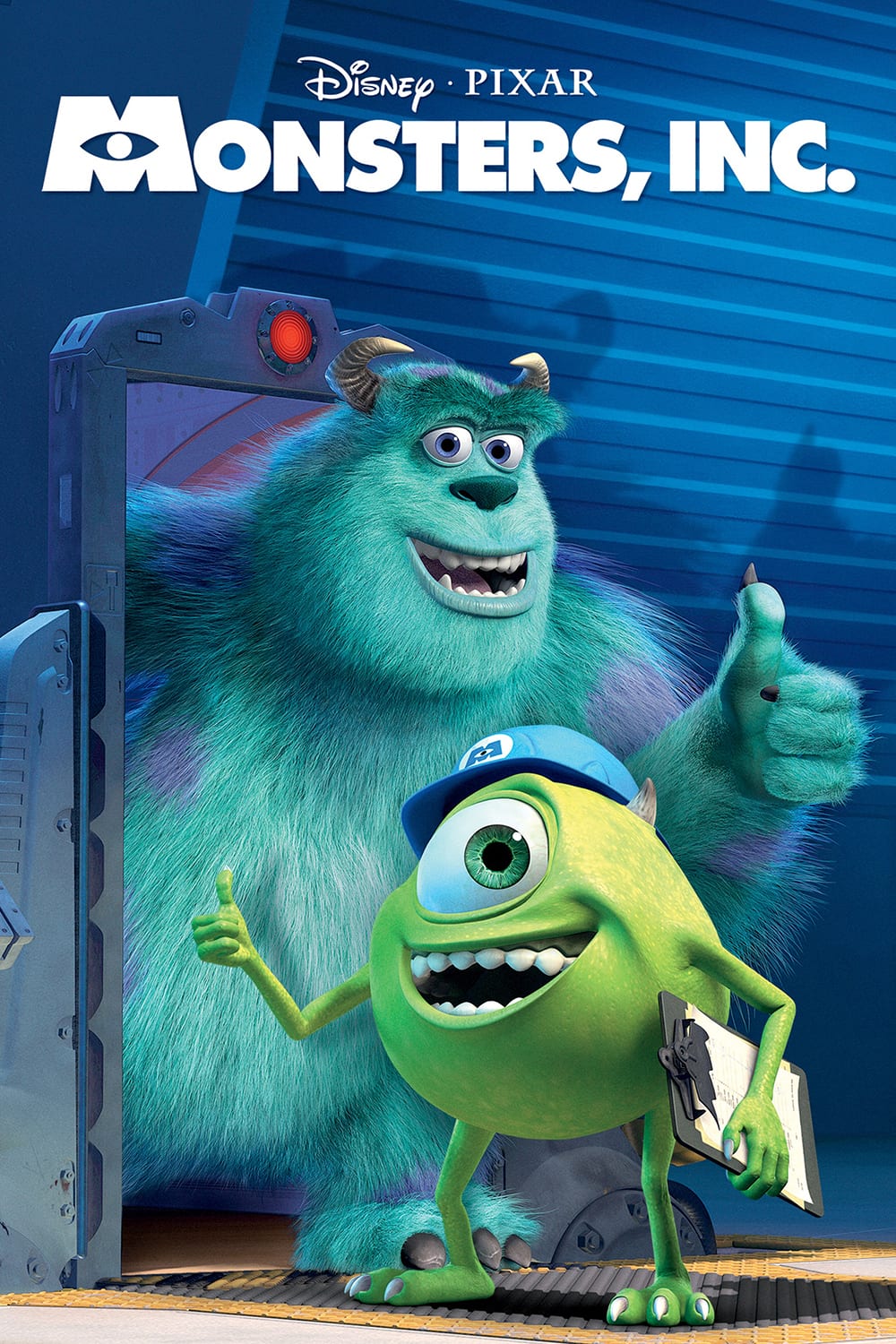
After using sound in collaboration with visuals on Wednesday, I was reminded of one of my favourite animated sequences from my childhood. The opening to Pixar's 2001 animated comedy, Monsters, Inc.
The opening cleverly features several animated doors (which play a prominent role in the film) dancing around, revealing title credits. All to one of Randy Newman's chirpy tunes from the soundtrack. The upbeat jazz instrumental provides a fun way of opening the film.
I really like how there's a nice balance between doors that move to the music, and ones that move independently. It can be dangerously easy to create a null which holds audio information, then go ahead and parent the hell out of every on screen object to the null. Sure, you'll have lots of moving pieces, but things can start to feel to mechanical and automated. The Monsters, Inc.opening has fluidity, while maintaining chirpiness and overall feeling in time with the music.
Check it out here, I think it's really fun.
Grab your tissues; this one's a tearjerker. The Rauch Brothers on Vimeo have been creating StoryCorps, a series of animated videos that preserve stories told by regular people across the country. They record people telling their stories to them or to a family member and then they animate it. I'm just going to leave a link to their Vimeo channel for you all to enjoy. It's really moving what they put out.